9 Things Nobody Tells You About Living in a Costa Rica Beach Town
The honest parts of beach town life we share with every buyer before they commit.
Living in a Costa Rica beach town is slower, saltier, and more seasonal than any vacation suggests. The sun sets before 6 p.m. all year, the dry season turns the hills brown, salt air wears out appliances, and the whole town moves to a two-season rhythm. Here are nine realities we tell people before they move to Playas del Coco.
We live and work in Playas del Coco, on Guanacaste's northern Pacific coast, where our team manages 60+ vacation rentals in Coco and Ocotal. We have watched a lot of people make this move. Most are glad they did. All of them were surprised by something. This list covers the surprises, good and inconvenient, because living in a Costa Rica beach town works best when you arrive with clear eyes. For the broader checklist, start with what to know before moving to Costa Rica.
1. The sun sets before 6 p.m., every night of the year
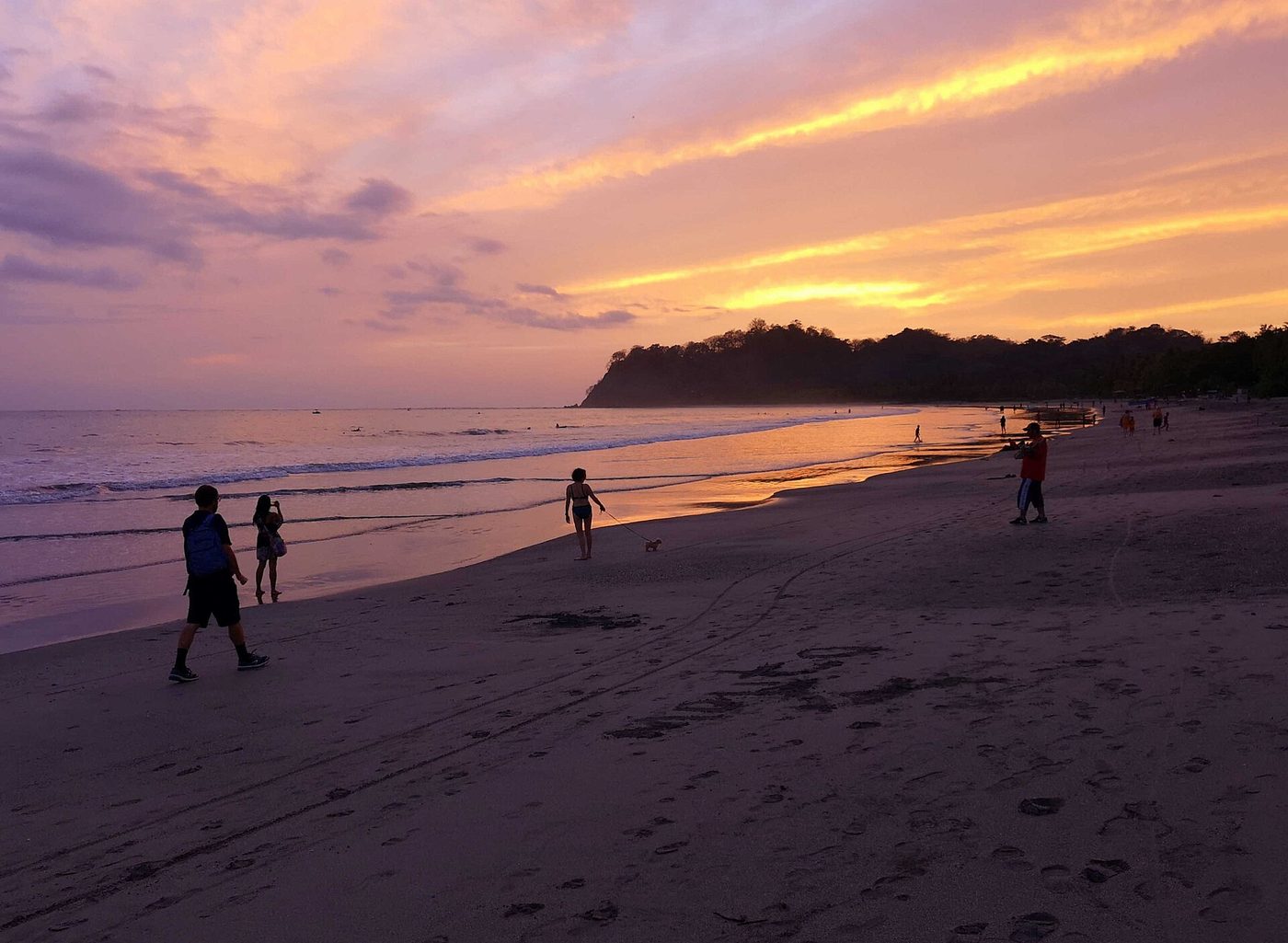
Costa Rica sits about ten degrees north of the equator, so day length barely changes. Sunrise lands a little after 5 a.m., and sunset falls between roughly 5:30 and 6 p.m. all year, with the longest days offering only about 12 hours and 40 minutes of light. There are no long summer evenings here. Life adjusts around it: people surf and walk at dawn, dinner runs early, and much of town is quiet by 9 p.m. Early risers thrive. Night owls need an adjustment period, and a good porch light.
2. The dry season is brown, windy, and dusty
The brochures show green jungle, but coastal Guanacaste is tropical dry forest. According to Costa Rica's official tourism board, the dry period runs from December to March, when only about 4 percent of the year's rain falls. The hills turn gold and brown, unpaved side roads kick up dust, and the Papagayo winds blow strong and steady from December into April. We happen to like the wind, since it keeps evenings comfortable, but it surprises almost everyone. Before you fall in love with a view, ask what it looks like in March, not just in July.
3. Salt air eats everything you own
Salt, humidity, and sun work on a coastal home every single day. Door hinges seize, "stainless" appliances spot, electronics age faster, and air conditioning condensers near the water need regular cleaning to survive. Cars rust sooner here than inland. None of this is a crisis; it is a maintenance rhythm. Homes that get rinsed, painted, and serviced on schedule hold up well, and homes that sit closed and ignored do not. When you shop for property, ask how a house was maintained, not just how it looks on viewing day. It is one of the first things we check when we take on a new rental.
4. Air conditioning becomes a budget line, not a luxury
Coco is one of the warmest corners of Costa Rica, and electricity costs more than most North Americans and Canadians expect. Cooling an entire house around the clock shows up on the bill fast. Long-term residents learn the local playbook: cool the bedrooms at night, use ceiling fans and cross-breezes by day, and let shade trees and covered terraces do quiet work. Homes designed for airflow cost noticeably less to run than glass boxes. We break down typical monthly expenses in our guide to the cost of living in Costa Rica, and we are happy to share real utility ranges from homes we manage if you ask.
5. The whole town runs on two seasons
From December through April the town is full: restaurants buzz, the beach is busy, rental calendars fill, and friends from home suddenly remember you exist. In the green season the pace drops, some businesses trim their hours, and locals get their favorite tables back. Neither version is the "real" Coco; both are. If you plan to rent out your home, expect the same curve in your income, with the strong months carrying the quiet ones. Budgeting by the year, not the month, is the habit that keeps beach town owners sane.
6. Everyone will know your name, and your business
Playas del Coco is a real town with a year-round Tico community, not a gated resort strip. That is exactly why we love it, and it comes with small-town physics. Your mechanic knows your neighbor. The ferreteria staff remember what you bought last month. Word of how you treat people travels fast, in both directions. A little Spanish and a lot of patience buy you more goodwill than any budget can. If you arrive expecting anonymity, you will not find it here, and after a year most people would not trade the familiarity for anything.
7. Big errands still mean a drive to Liberia
Daily life in Coco is genuinely convenient: supermarkets, pharmacies, banks, clinics, and dozens of restaurants sit within a few minutes of most homes. But the public hospital, the big-box stores, most government offices, and the international airport are in or near Liberia, roughly 30 minutes away by a good paved road. Furniture, appliances, specialist appointments, and paperwork all become Liberia runs. Nobody finds this a hardship, but plan half a day for it, and batch your errands the way locals do.
8. The green season is the part nobody warns you to love
From May through August, Guanacaste gets about half its annual rain, and much of it falls as afternoon or evening storms after bright mornings. September and October are the wettest stretch, and by November the coast is drying out again. The landscape turns deep green, the sunsets go cinematic, and the town feels like it belongs to the people who live here. Many residents quietly call it their favorite time of year. The one warning we give: closed-up homes grow mold fast in October. Air the house, run a dehumidifier, or have someone check on it if you travel.
9. It is never actually quiet
Howler monkeys start calling before dawn and sound like something much larger than a monkey. Roosters do not care what time you went to bed. Dogs answer each other across the valley, music drifts from town on weekend nights, and the surf never stops. Most people stop hearing it within a month, and plenty grow to love waking up to howlers. But if silence matters to you, visit a home at 5 a.m. and 10 p.m. before you buy it, not just at noon on a Tuesday.
So is living in a Costa Rica beach town still worth it?
For us, absolutely, and for most people who come with realistic expectations. The trade is convenience and predictability for warmth, community, and a daily life that happens mostly outdoors. The people who struggle are the ones who expected a vacation that never ends. If you want the fuller version of that honest conversation, read our post on 10 reasons to reconsider moving to Costa Rica, then our take on living in El Coco for the other side of the ledger.
The best test is time on the ground, in both seasons if you can manage it. Stay in one of the homes we manage, walk the town in the evening, and see how the rhythm fits. When you are ready to look seriously, browse our current listings or ask us anything on WhatsApp. We at Expat Properties | CR will give you the same straight answers you just read.
Frequently asked questions
What is the rainy season really like in a Guanacaste beach town?
Milder than most people fear. From May through August, rain usually arrives as afternoon or evening storms after sunny mornings, and Guanacaste stays the driest region of Costa Rica. September and October are the wettest months, and the landscape turns green and quiet. Many residents consider it the best time of year.
Is Playas del Coco a good place to live year-round?
Yes, and plenty of people do. Coco has supermarkets, banks, pharmacies, clinics, restaurants, and a year-round Tico community, with Liberia's hospital and international airport about 30 minutes away. The trade-offs are heat, dry season dust and wind, and a quieter green season. Most full-time residents adjust within their first year.
Should I rent before buying in a Costa Rica beach town?
We think so, even though we sell homes for a living. A stay of a few weeks, ideally once in high season and once in green season, tells you more than any listing photos can. You will learn how the heat, noise, seasons, and pace actually fit your life before you commit money.
Cover photo: Julián Monge-Nájera, CC BY-SA 4.0, via Wikimedia Commons · Photo: Alexey Demidov, Pexels