The Catalinas Islands: Guanacaste's Best Diving
Giant manta rays, volcanic pinnacles, and a 45-minute boat ride from Playas del Coco.
The Catalina Islands sit off Costa Rica's Guanacaste coast, a cluster of volcanic rock pinnacles about 15 miles south of Playas del Coco. Dive boats from Coco reach them in roughly 45 minutes, and from November through April they offer the region's signature underwater encounter: giant Pacific manta rays with wingspans that can pass 20 feet.
What exactly are the Catalina Islands?
The Catalinas (Islas Catalinas in Spanish) are not islands you visit in the normal sense. Nobody lives on them, there is no dock, and you do not land on them at all. They are bare volcanic rock formations rising out of the Pacific, roughly two miles off Playa Flamingo and about 15 miles from Playas del Coco. Everything interesting happens below the waterline.
Underwater, those pinnacles keep going: walls, boulders, arches, and rocky slopes swept by nutrient-rich Pacific currents. That food supply is the whole story. Plankton-heavy water is why the big animals show up here, and it is also why this is not gin-clear Caribbean diving. You trade a little visibility for a lot of life. We think it is a good trade.
Why is this the best diving in Guanacaste?
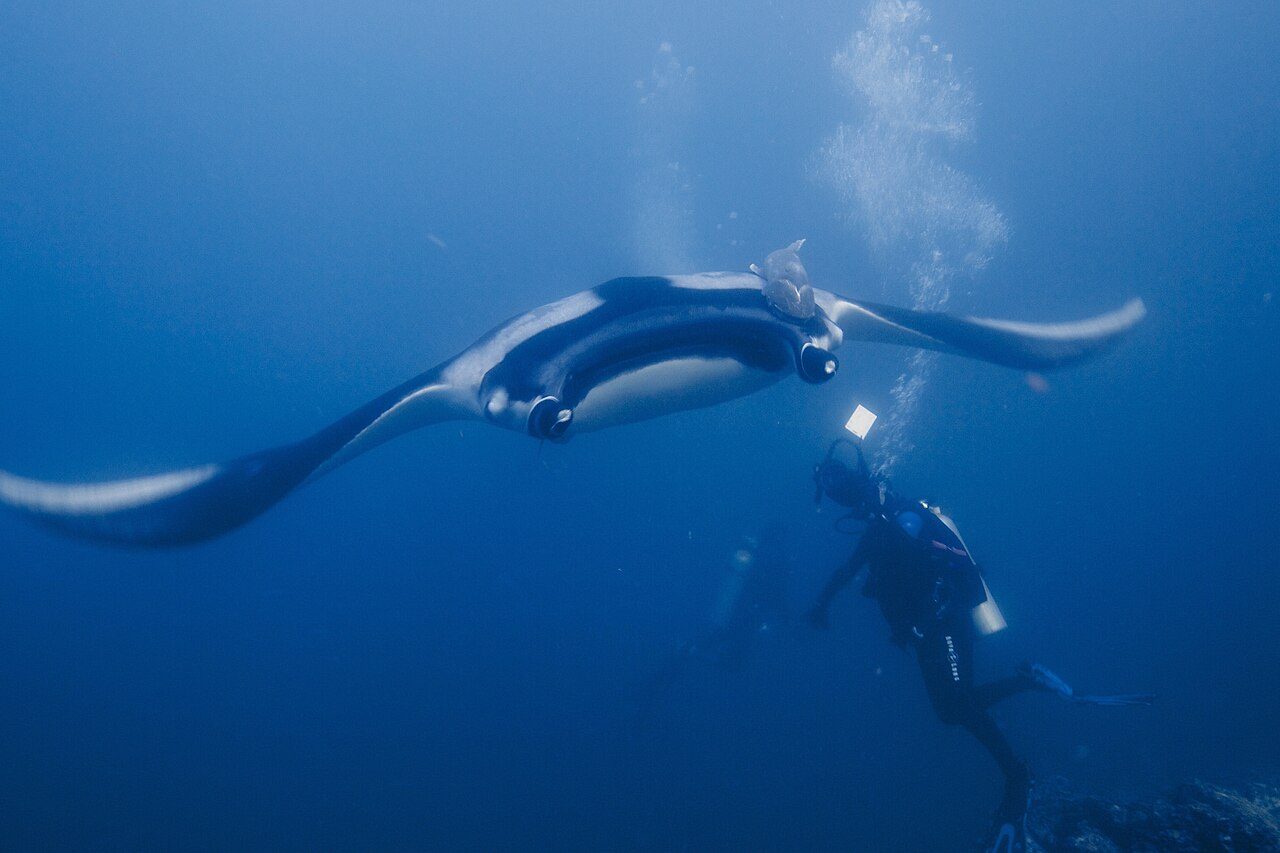
One animal, mostly: the giant Pacific manta ray. The Catalinas are one of the few places in Costa Rica where divers see giant mantas with real consistency, close to shore, on an ordinary two-tank morning trip. According to NOAA Fisheries, the giant manta (Mobula birostris) is the world's largest ray, with wingspans up to 26 feet. It is a filter feeder, completely harmless to divers, and listed as threatened under the US Endangered Species Act, which makes a calm, respectful encounter feel like a privilege rather than a show.
The mantas visit shallow rocky points at the Catalinas that function as cleaning stations, spots where small fish pick parasites off their skin. When a manta settles over a cleaning station, it will often circle divers for most of a dive. People surface changed. We are not exaggerating; ask anyone in town who has done it.
When can you see giant manta rays at the Catalinas?
Manta season runs roughly November through April, which lines up with Guanacaste's dry season. Local operators like Rich Coast Diving in Playas del Coco run dedicated manta trips in this window, and the most consistent action tends to fall between January and March, when cooler, nutrient-rich water moves along the coast.
Two honest caveats. First, these are wild animals, and no shop can promise a sighting on any given morning. Second, the same cool upwellings that bring the mantas also drop the water temperature, so the best manta months are also the chilliest ones. More on that below.
What else lives at the Catalina Islands?
Even without a manta, a Catalinas dive is busy. Regulars include:
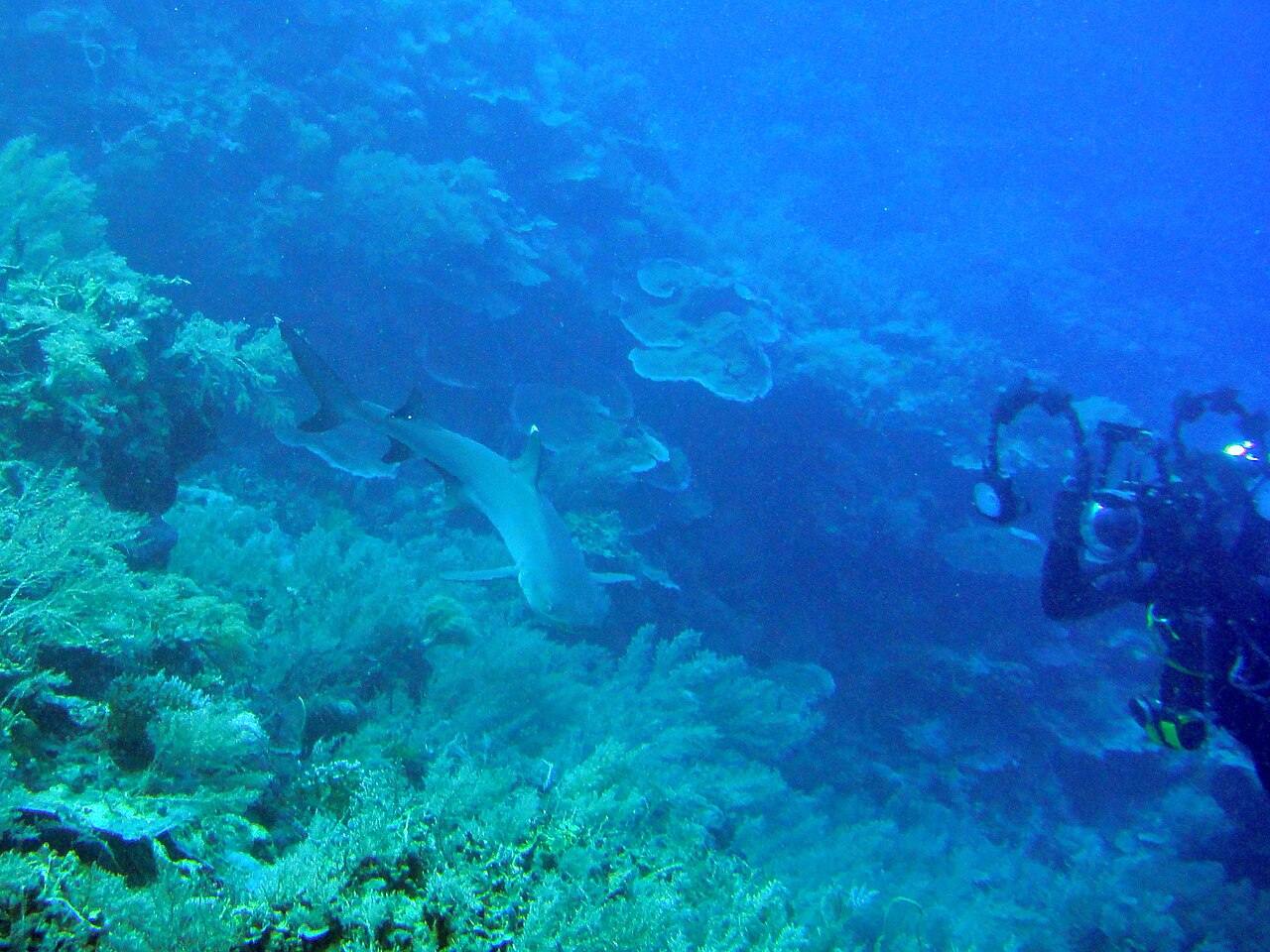
- White-tip reef sharks, usually resting under ledges or cruising the rocks. Small, calm, and everywhere.
- Rays of every kind: spotted eagle rays, devil rays (smaller cousins of the giant manta), and stingrays on the sand.
- Sea turtles, moray eels, and octopus tucked into the rock.
- Big schools of fish: grunts, snapper, king angelfish, and clouds of smaller reef fish over the pinnacles.
Humpback whales pass along this coast on two migrations each year, and boats sometimes spot them on the ride out. Named sites are scattered around the different rocks, and shops rotate through them based on conditions. You will hear names like The Wall, Guacamaya, The Shoe, and Chancleta from the local dive crews.
What are the diving conditions like?
This is Pacific diving, and we would rather set expectations straight than oversell it. Visibility commonly ranges from about 15 to 70 feet depending on the day, the site, and the season. Some days are green and soupy, and those are often the best manta days, because murky water means food.
Water temperature swings more than people expect. In the dry season months, upwellings can drop the water into the high 60s and low 70s Fahrenheit, with cold layers called thermoclines that roll through mid-dive. In the green season (May through November) the water warms up, often into the low 80s. Most divers want at least a 5 mm wetsuit in manta season; in the warm months a 3 mm is usually plenty. Surge and current are common around the pinnacles, so shops generally recommend some ocean diving experience for the more exposed sites, though calmer spots work fine for newer divers.
If you are planning a trip around diving, our guide to the best time to visit Costa Rica covers how the dry and green seasons feel on land, too.
How do you dive the Catalinas from Playas del Coco?
Coco is the dive hub of northern Guanacaste, and several long-running shops in town run Catalinas trips. Rich Coast Diving and Deep Blue Diving both operate from the town center, and Rocket Frog Divers runs fast boats from the Coco area as well. The standard format is a two-tank morning trip: early departure (manta trips often leave around 6:00 a.m.), about 45 minutes each way by boat, two dives with a surface interval between them, and back in town for lunch.
A few practical notes from living here:
- Book ahead in high season. December through March, boats fill up, especially manta-focused trips.
- Do a local check dive first. Some shops require a warm-up dive at the near-shore sites before taking you to the Catalinas. It is a sensible policy, not an upsell.
- Wind can reschedule you. Dry season brings windy stretches on this coast, and shops will move or adjust trips when the crossing gets rough. Build a spare day into your plan.
- Ask about the Bat Islands. Advanced divers chasing bull sharks can ask the same shops about Islas Murciélagos trips, a separate and more demanding day out.
Is it worth it if you do not dive?
Yes, with adjusted expectations. Snorkel trips run to the Catalinas, and because mantas feed near the surface, snorkelers do sometimes see them from above. You will also see reef fish around the shallower rocks. That said, the depth and the current mean divers get the better show. If you have ever considered getting certified, this coast is a genuinely good place to do it: the certification courses are inexpensive by North American standards, and you finish with the Catalinas as your local reward.
Non-divers in the group have easy alternatives the same morning: a calm swim at Playa Ocotal, the quiet cove five minutes from Coco, or a beach-hopping day using our ranking of the 17 best beaches in Guanacaste.
Diving is one more reason people end up staying
We have watched it happen many times. Someone comes for a week of diving, does the Catalinas twice, and starts asking what houses cost here. It makes sense: very few places let you live in a walkable beach town and be over a world-class manta site by 8:00 a.m. Coco and Ocotal put you closer to the Catalinas, the Bat Islands, and the local sites than anywhere else you would actually want to live.
If that thought has crossed your mind, we can help you think it through honestly. Browse our current listings in Coco and Ocotal, or look at vacation rentals to base yourself here for a dive season first. And if you just have questions about the town, the diving, or the market, send us a message. We live here, several of our owners are divers, and we are happy to point you to the right boat.
Frequently asked questions
When is the best time to see manta rays at the Catalina Islands?
Giant manta season at the Catalina Islands runs roughly November through April, with the most consistent sightings from January through March. Cool, nutrient-rich water draws the mantas to cleaning stations during these months. Sightings are never guaranteed, so plan more than one dive day if seeing a manta is your main goal.
Can beginners dive the Catalina Islands?
Yes, on the calmer sites. Shops in Playas del Coco take newly certified divers and even run Discover Scuba experiences with depth limits. The more exposed pinnacles have surge and current, so operators usually recommend some ocean experience, and several require a local check dive before a Catalinas trip. Tell the shop your real experience level.
How do you get to the Catalina Islands from Playas del Coco?
By dive boat only. There is no dock and no landing on the rocks. Dive shops in Playas del Coco run two-tank morning trips, with about 45 minutes of boat ride each way. Trips often leave around 6:00 a.m. in manta season and return to town by early afternoon. Boats also depart from Flamingo and Potrero, which are closer.
Cover photo: Matt Kieffer, CC BY-SA 2.0, via Wikimedia Commons · Photo: Elias Levy, CC BY 2.0, via Wikimedia Commons