
Playa Grande and the Leatherback Turtles
The story of Guanacaste's most protected beach and the giant turtles that made it famous.
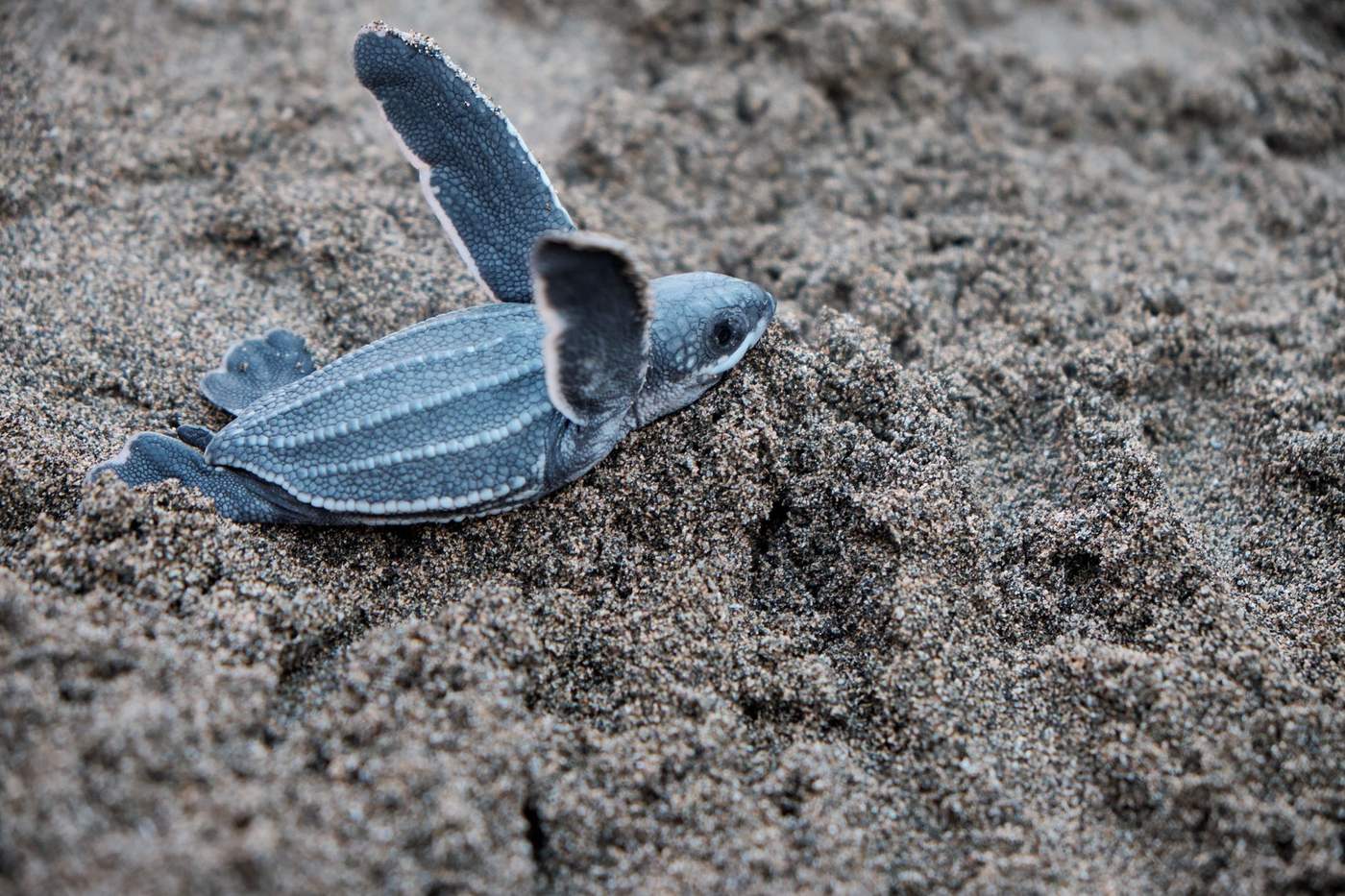
Playa Grande, on Guanacaste's Gold Coast just north of Tamarindo, is the most important nesting beach in the Americas' eastern Pacific for the critically endangered leatherback sea turtle. From roughly October through March, the Playa Grande turtles, nesting leatherbacks, haul out at night to lay eggs inside Las Baulas National Marine Park, and visitors can watch on strictly guided tours.
Why is Playa Grande famous for leatherback turtles?
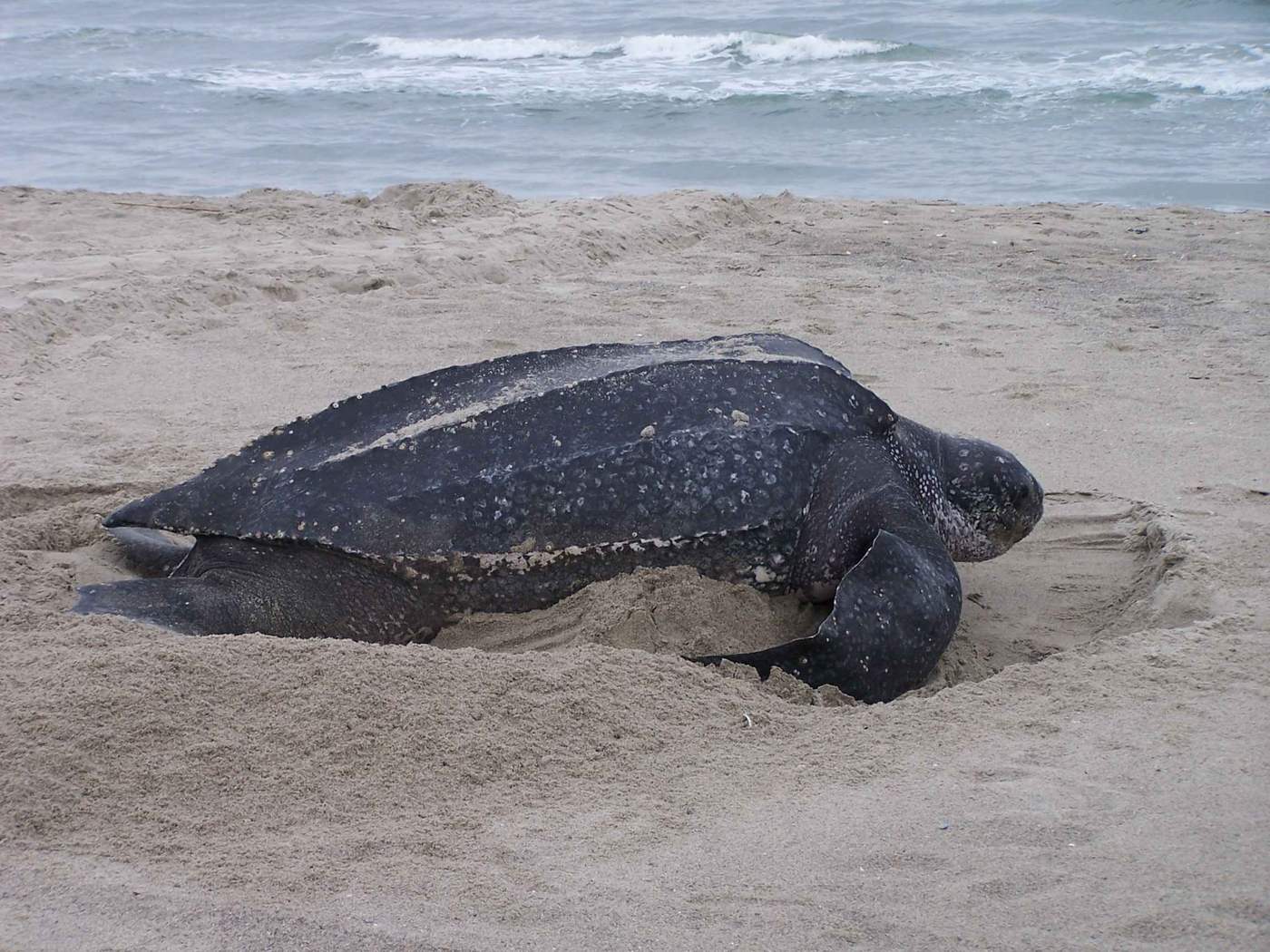
The leatherback (baula in Spanish) is the largest turtle on Earth. According to NOAA Fisheries, adults reach 5 to 6 feet in length and weigh 750 to 1,000 pounds. They have no hard shell, just a ridged, rubbery carapace, and they dive nearly 4,000 feet deep chasing jellyfish, deeper than most marine mammals go.
For reasons scientists still study, this ancient animal chose Playa Grande as its flagship nesting beach on the Pacific coast of the Americas. The long, dark, gently sloped stretch of sand offered exactly what nesting females need: minimal artificial light, soft sand above the high tide line, and warm temperatures to incubate eggs. That is why the Playa Grande turtles became the center of one of Costa Rica's most focused conservation efforts.
When is leatherback nesting season at Playa Grande?
Leatherbacks nest during Guanacaste's dry season. The broad window runs from October through March, and the official tour season that Costa Rica's tourism board publishes for Las Baulas Marine National Park runs from October 20 through February 15. Nesting happens at night, usually around high tide, so tours run late and require patience. Some nights several turtles come ashore. Other nights none do. Guides are honest about this, and so are we: a sighting is a privilege, not a guarantee.
Each female lays a clutch of eggs in a deep chamber she digs with her rear flippers, covers it, disguises the site, and returns to the sea. About two months later, hatchlings emerge and scramble toward the brightest horizon, which on a healthy beach is the moonlit ocean. This is why light discipline matters so much at Playa Grande. A single porch light can send hatchlings the wrong way.
What is Las Baulas National Marine Park?
Las Baulas National Marine Park was created in the early 1990s specifically to protect this nesting ground. It covers about 7.7 square kilometers of land, including Playa Grande, Playa Ventanas, and Playa Langosta, plus a marine section of roughly 171 square kilometers that extends 12 nautical miles offshore. The land parcels behind the beach sit inside or beside the park boundary, which has shaped development here more than anywhere else in Guanacaste.
The result is a beach town unlike its neighbors. Tamarindo, visible across the estuary, is busy and built up. Playa Grande stayed low, quiet, and dark at night. There are no beachfront high rises, no bright strip of bars on the sand. Surfers love it for one of the most consistent beach breaks in Costa Rica, and it still empties out by sunset during nesting season.
How do you see the turtles responsibly?
During nesting season, access to the beach at night is only allowed with an authorized guide. The rules published by the tourism board are clear and worth knowing before you go:
- Groups are capped at 15 people, and you must go with a licensed guide or operator.
- No photos and no touching the turtles. Phone screens and flashes are enough to disturb a nesting female.
- Only guides carry flashlights, fitted with red filters.
- Park entry costs 12 US dollars for foreign visitors. Confirm current fees and hours before your visit, since they change during turtle season.
Spotters walk the beach and radio the guides when a turtle begins laying, so groups approach only during the phase when she enters a trance-like state and is least disturbed. It is a slow, quiet, sometimes chilly experience. It is also one of the most moving things you can do in Guanacaste. Watching an animal that outlasted the dinosaurs dig a nest a few feet away changes how you think about this coast.
Why are the leatherbacks in trouble?
Here is the honest part. Eastern Pacific leatherbacks are in severe decline. NOAA Fisheries reports the population has fallen by more than 90 percent over three generations, and The Leatherback Trust, the conservation organization that works at Playa Grande, puts the decline at more than 98 percent since 1990. The causes are mostly human: turtles drowned as bycatch in fishing gear, decades of egg poaching before the park existed, plastic pollution that looks like jellyfish, and warming, brightening coastlines.
Nesting numbers at Playa Grande today are a small fraction of what researchers counted in the late 1980s. Nobody should sell you a turtle tour with promises of a beach covered in giants. What Playa Grande offers instead is the real thing: a protected beach, serious science, and a community that reorganized itself around keeping one species alive. Olive ridley and black turtles also nest here, so guides often find a turtle even when no leatherback appears.
What does the park mean for living or investing near Playa Grande?
We sell real estate, so let us be direct about the tradeoffs. The park and its protections are the reason Playa Grande looks the way it does, and they come with real rules: setbacks from the beach, lighting restrictions in some zones, and closer scrutiny of construction than you will find in most beach towns. If you want a lively boardwalk and nightlife at your doorstep, this is not your town. Tamarindo, ten minutes away by boat across the estuary, plays that role.
If you want a low-density surf town where the beach goes dark and quiet at night, the equation flips. The constraints that limit construction also protect the value of what already exists there. Homes near Playa Grande trade partly on the guarantee that no tower will ever block the view. We have represented listings in Playa Grande, and buyers consistently tell us the same thing: they chose it because it will not turn into somewhere else. You can see what we currently have available on our properties page.
The turtles are part of daily life, too. Neighbors volunteer with hatchery patrols, kids release hatchlings with The Leatherback Trust's local programs, and every October the town quietly shifts into nesting mode. It is a different relationship with a beach than most places offer. We wrote more about the region's animals in our post on the wildlife of Guanacaste, and about how the coast's towns differ in what makes Playas del Coco different.
Planning a visit from Playas del Coco?
Playa Grande makes an easy day trip or overnight from our home base in Playas del Coco: drive south past Huacas, or combine it with a Tamarindo day and cross the estuary by boat. Go in the dry months if the Playa Grande turtles are your goal, and book the night tour ahead. Our guide to the best time to visit Costa Rica covers the seasons in detail.
If a quiet, protected beach town sounds like your kind of Costa Rica, we can help. Browse our current listings, including homes near Playa Grande when we have them, or send us a message and we will give you a straight answer about whether this coast fits what you are looking for. Expat Properties | CR is based in Playas del Coco, and we are happy to point you to the good guides for turtle season.
Frequently asked questions
Can you see leatherback turtles at Playa Grande?
Yes, during nesting season, roughly October through March, on guided night tours inside Las Baulas National Marine Park. Sightings are never guaranteed because the eastern Pacific leatherback population has declined sharply, but guides use spotters to find nesting females, and olive ridley and black turtles nest on the same beach.
When is turtle nesting season at Playa Grande, Costa Rica?
Leatherbacks nest during the dry season, with the official tour window running from October 20 through February 15 and some activity into March. Nesting happens at night around high tide, so tours run late in the evening. Hatchlings emerge about two months after each nest is laid.
Why is night beach access restricted at Playa Grande?
The beach sits inside Las Baulas National Marine Park, created to protect nesting leatherbacks. Artificial light and foot traffic disturb nesting females and can disorient hatchlings, so nighttime access during the season requires an authorized guide, groups are capped at 15 people, and photos and flashlights are prohibited for visitors.
Cover photo: Jolo Diaz, Pexels · Photo: Rabon David, U.S. Fish and Wildlife Service, Public domain, via Wikimedia Commons