Wildlife of Guanacaste: What You Will Actually See Living Here
A resident's honest guide to the monkeys, birds, reptiles, and marine life around Playas del Coco.
The wildlife of Guanacaste is one of the best reasons to live here. On an ordinary morning walk in Playas del Coco you can see howler monkeys, iguanas, magpie-jays, and parakeets, while the region's protected areas shelter jaguars, nesting sea turtles, and roughly 500 bird species. You do not need a tour. You need a porch.
We manage 60+ vacation rentals in Coco and Ocotal, and the messages we get from guests about animals outnumber every other kind of note. Usually it is a photo of a monkey on the pool fence with a lot of exclamation marks. This guide covers what you will actually see living here, what you probably will not, and how to share the neighborhood politely.
Why is there so much wildlife in Guanacaste?
Guanacaste is the largest remaining stronghold of tropical dry forest in Central America, an ecosystem that has mostly disappeared elsewhere in the region. The Area de Conservacion Guanacaste, a UNESCO World Heritage Site since 1999, protects about 147,000 hectares running from the Pacific up over the volcanoes, with roughly 7,000 plant species and around 500 bird species inside its borders. Jaguars and tapirs still live in its remote corners.
The animals do not read park boundaries. Dry forest wildlife follows water and fruiting trees, and irrigated gardens in Coco, Ocotal, and Playa Hermosa supply both. That is why so much of the wildlife of Guanacaste shows up in residential neighborhoods rather than staying politely inside Santa Rosa or Palo Verde.
Which monkeys will you see around Playas del Coco?
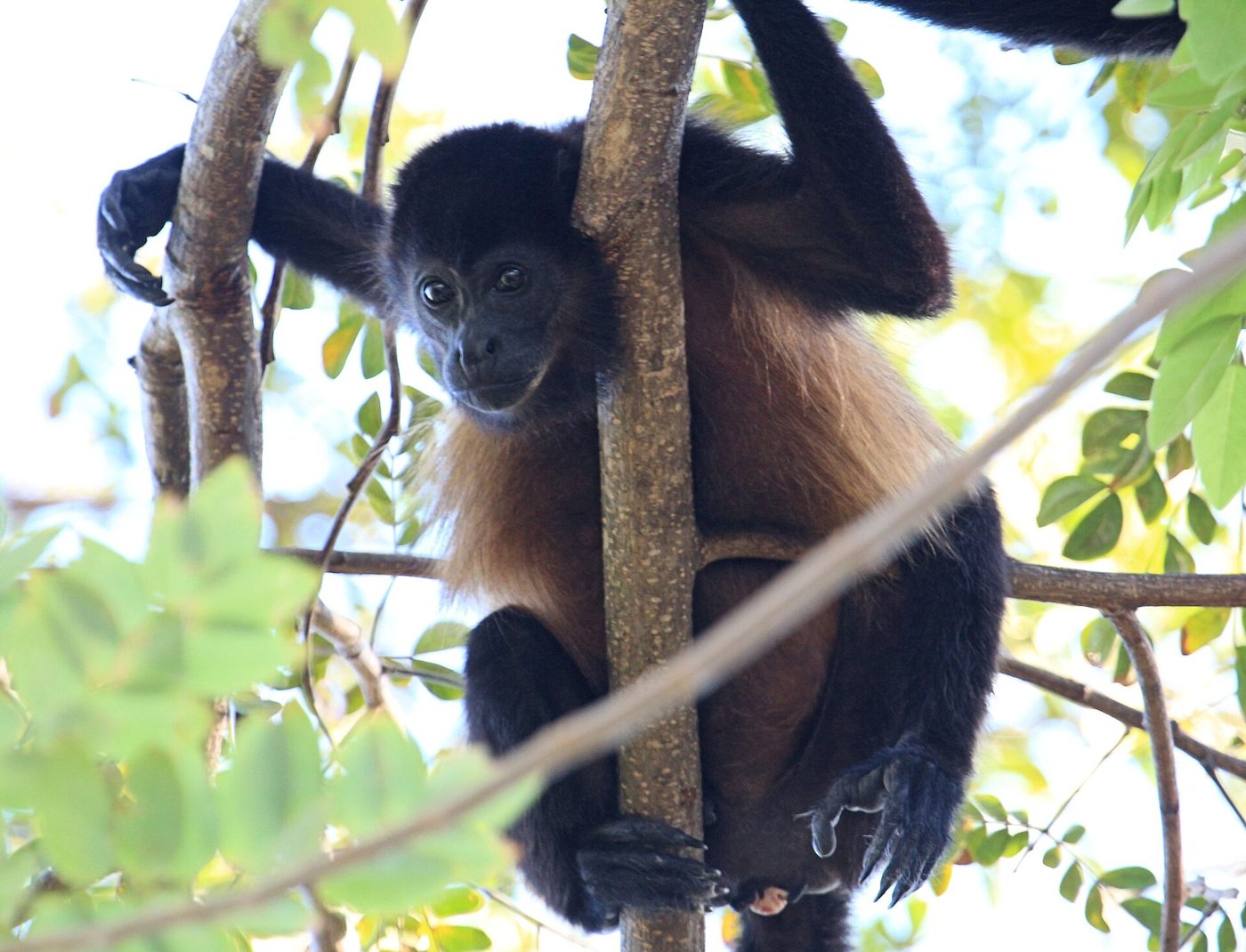
Howler monkeys are the headliners. Their deep, rasping roar at dawn sounds like something much larger than a 15-pound monkey, and first-time guests regularly ask us what it was. Troops move through the tree lines along the roads in Coco, Ocotal, and Hermosa, and they will happily cross a garden if the branches connect.
White-faced capuchins are the second act. They are bolder, smarter, and more common near forested developments and in the national parks than in the middle of town. A word of honesty: you will not see squirrel monkeys or spider monkeys in this corner of the country. Those live in wetter forests, mostly farther south. Guanacaste gives you two monkey species, reliably, and that is still two more than most people grew up with.
What birds can you spot without leaving your garden?
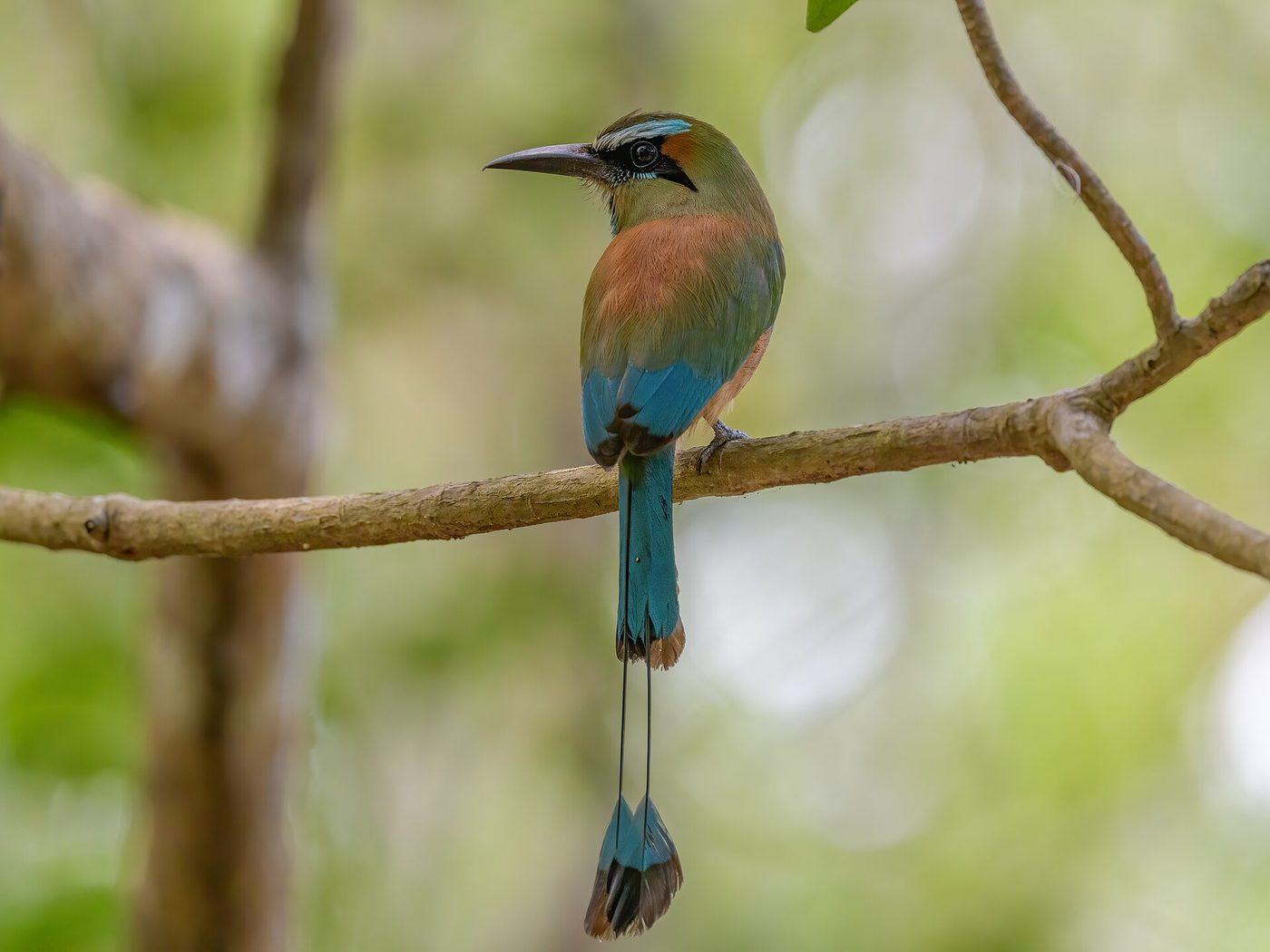
The turquoise-browed motmot, with its pendulum tail, is the signature bird of the dry forest and a common garden visitor. White-throated magpie-jays work the trees in noisy family gangs. Orange-fronted parakeets scream past in the late afternoon, rufous-naped wrens chatter in the hedges, hummingbirds hold territory over anything flowering, and crested caracaras patrol the beach road.
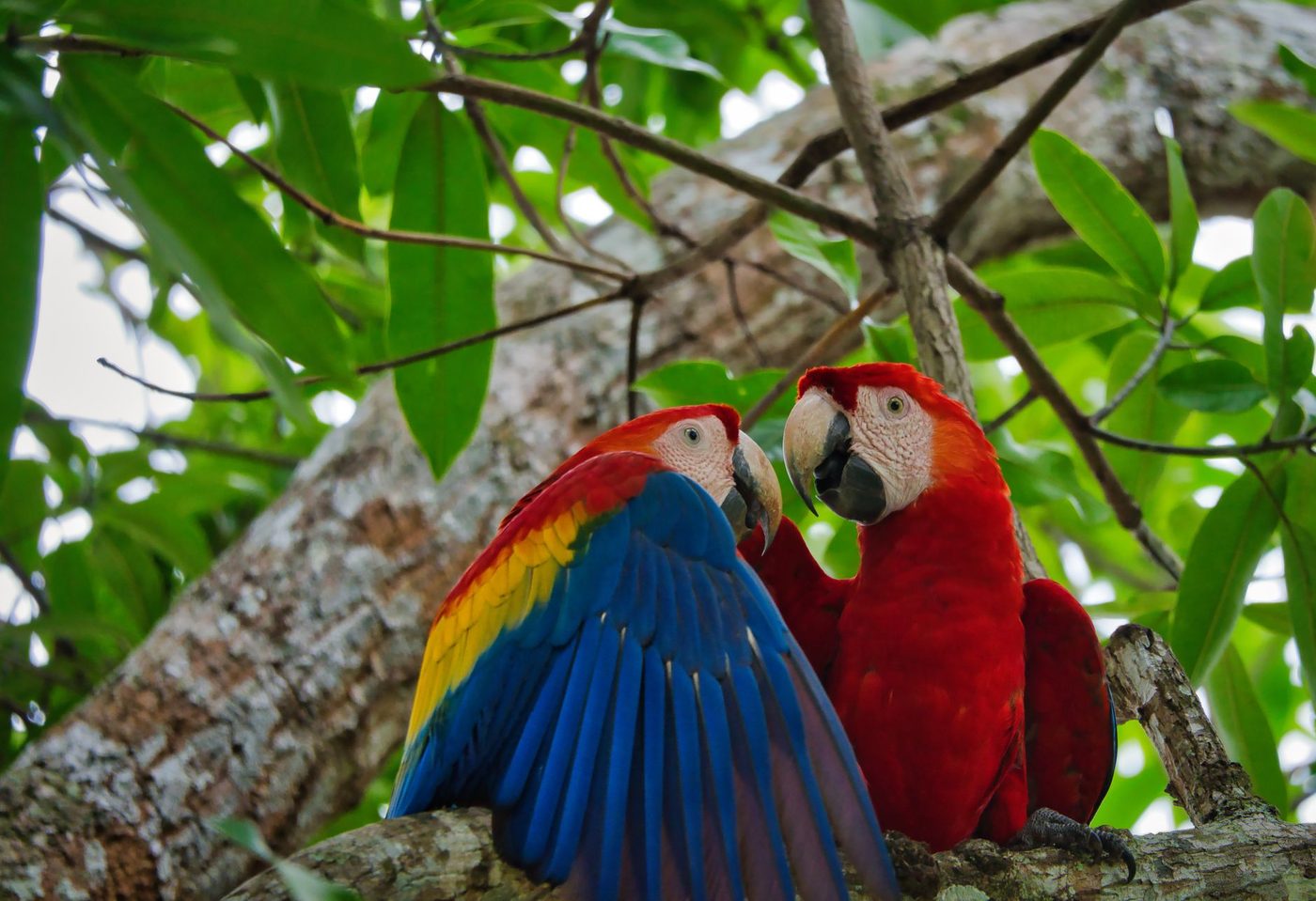
One correction to something we hear often, and something an older version of this post implied: scarlet macaws are a rare treat here, not a daily sight. The reliable flocks live farther south along the central Pacific coast. Reintroduction work is slowly expanding their range, but if anyone promises you macaws over your Coco garden every morning, be skeptical. The birding here is still excellent, especially in the green season when everything is nesting. Our post on the best time to visit Costa Rica explains how the seasons change what you see.
What reptiles should you expect around the house?
Black spiny-tailed iguanas, called garrobos locally, will claim your warmest rock, your pool deck, and occasionally your roof. Green iguanas hold the trees. Neither wants anything to do with you. House geckos are the best free pest control in the tropics: they eat insects all night and announce themselves with a cheerful chirp.
Snakes live here too, and we will not pretend otherwise. Most encounters are a boa moving through at night or a harmless racer crossing a trail. A few venomous species do live in the region, so the standing local rules apply: keep grass cut, carry a light after dark, and do not put your hands where you cannot see. If a gecko chirping in the kitchen would ruin your evening, tropical living will take some adjustment. Most people are charmed within a week.
What marine life lives off the Guanacaste coast?
The bays around Coco, Ocotal, and Hermosa hold rays, reef fish, sea turtles, and dolphins, which is why the area has such a strong diving and snorkeling scene. Humpback whales pass along the Costa Rican Pacific in two waves, northern hemisphere whales roughly December to April and southern whales roughly July to November, according to Costa Rica Guide. Honesty again: sightings are more consistent far to the south near the Osa Peninsula. Here they are a lucky bonus on a fishing or dive trip, not a guarantee.
The turtles are the real regional spectacle. At Ostional, south of here on the Nicoya coast, olive ridley turtles come ashore in mass nesting events called arribadas, with the biggest arrivals concentrated from about August to December. Leatherbacks nest at Las Baulas National Marine Park near Playa Grande; night access is regulated, so go with a licensed guide. For more on coastal life in our immediate area, see our expat guide to the Papagayo region.
How do the seasons change what you see?
In the dry months the trees drop their leaves, animals concentrate around remaining water, and spotting gets easy: this is when a bare tree full of howlers or a garden visit from a coati is most likely. In the green season the forest fills in, the birds get loud, and the butterflies arrive in numbers. Neither season is better for wildlife. They are just different shows on the same stage.
How do you live well alongside the wildlife?
A few habits keep the relationship friendly, and we cover the philosophy in more depth in Living in Harmony with Nature:
- Never feed wildlife. A fed monkey becomes a bold monkey, and bold monkeys get into trouble. This is the single most important rule.
- Secure your trash. Raccoons, coatis, and ants all read an open bin as an invitation.
- Mind the monkey highways. Branches touching your roof are a bridge. Trim them if you would rather not host.
- Screens matter. Good screens let you keep windows open without sharing your kitchen.
- Keep pets in at night. The forest has its own schedule after dark.
Many newer developments here preserve mature trees and green corridors on purpose, partly for the animals and partly because shade is worth real money in Guanacaste.
Does the wildlife matter when you buy or rent here?
More than most buyers expect. Guests book Costa Rica partly for the animals, and in our experience a home with mature trees and regular monkey traffic earns its place in vacation photos, which is exactly what fills a rental calendar. The tradeoff is honest: closer to the forest means more visitors, including the six-legged kind, and a good property manager plans for that.
If you want to see what living with the wildlife of Guanacaste actually looks like, browse our current listings or send us a message. We live here, we can tell you which neighborhoods the howlers favor, and we consider that a selling point.
Frequently asked questions
Are howler monkeys dangerous to people or pets?
No. Howler monkeys are loud but not aggressive, and they almost never come to the ground. Problems only start when people feed them, which makes troops bold around homes. Keep a respectful distance, never offer food, and secure trash. They will treat your garden as a corridor, not a destination, and move on within minutes.
When can you see sea turtles nesting in Guanacaste?
The famous olive ridley arribadas at Ostional are concentrated from roughly August to December, when thousands of turtles can arrive over a few nights. Leatherbacks nest at Las Baulas National Marine Park near Playa Grande, where night access is regulated. In both places, visit with a licensed local guide and check current rules before you go.
Are there dangerous snakes or crocodiles near Playas del Coco?
A few venomous snake species live in Guanacaste, though encounters in town are rare. Keep grass cut, use a flashlight at night, and leave any snake alone. Crocodiles live in rivers and estuaries, notably around the Tempisque basin, so do not swim in river mouths. The beaches and pools around Coco are not crocodile habitat.
Cover photo: Paul Harrison, CC BY-SA 4.0, via Wikimedia Commons · Photo: Becky Matsubara from El Sobrante, California, CC BY 2.0, via Wikimedia Commons