What Makes Playas del Coco Different From Other Guanacaste Beach Towns?
An honest local look at why buyers, retirees, and remote workers keep choosing Coco over the rest of the Gold Coast.
Playas del Coco stands out among Guanacaste beach towns for three practical reasons. It is the closest major beach town to Liberia international airport (about a 25 to 30 minute drive), it is a walkable town with mature infrastructure, and it has a year-round community of Costa Ricans and expats rather than a purely seasonal crowd.
Guanacaste has no shortage of beautiful coastal towns: Tamarindo, Flamingo, Nosara, Samara, Playa Hermosa, Ocotal, Las Catalinas. We live and work in Playas del Coco, we manage 60+ vacation rentals here and in Ocotal, and we spend a lot of time explaining to buyers why this particular town keeps pulling people in. Here is our honest answer, including what Coco is not.
How close is Playas del Coco to the airport, really?
About 23 kilometers (roughly 14 miles) on fully paved roads. From the moment you clear customs at Guanacaste Airport (LIR) in Liberia, you can be standing in your condo in Coco in 25 to 35 minutes, depending on traffic through Sardinal. No other established beach town in Guanacaste beats that. Tamarindo is roughly 65 kilometers and well over an hour from the airport. Nosara and Samara are around two hours, and parts of the Nosara road still demand patience.
This matters more than most first-time buyers realize, and it matters more every year. Guanacaste Airport handled about 1.9 million passengers in 2024, its busiest year on record, with direct flights from dozens of North American and European cities. For vacation rental owners, a short airport transfer is a genuine booking advantage: guests arriving on an afternoon flight can be at the pool before sunset instead of white-knuckling a dark two-hour drive. For owners who visit several times a year, that convenience compounds.
Why does Coco feel like a town and not a resort?
Playas del Coco is one of the oldest beach communities in Guanacaste. It grew up as a working fishing port with a church, a plaza, and a main street long before tourism arrived, and that history still shapes daily life. If you are curious how it evolved, we wrote about it in the history of Playas del Coco.
In practice, that heritage means you can live here without a car if you want to. Within the town itself you will find:
- Full-service supermarkets (Auto Mercado at Coco Walk, Luperon, Super Compro) plus a weekly feria for local produce
- Pharmacies, medical and dental clinics, veterinarians, and labs
- Banks with ATMs, hardware stores, gyms, barbers, and bakeries
- Dozens of restaurants, from local sodas to sushi and steakhouses
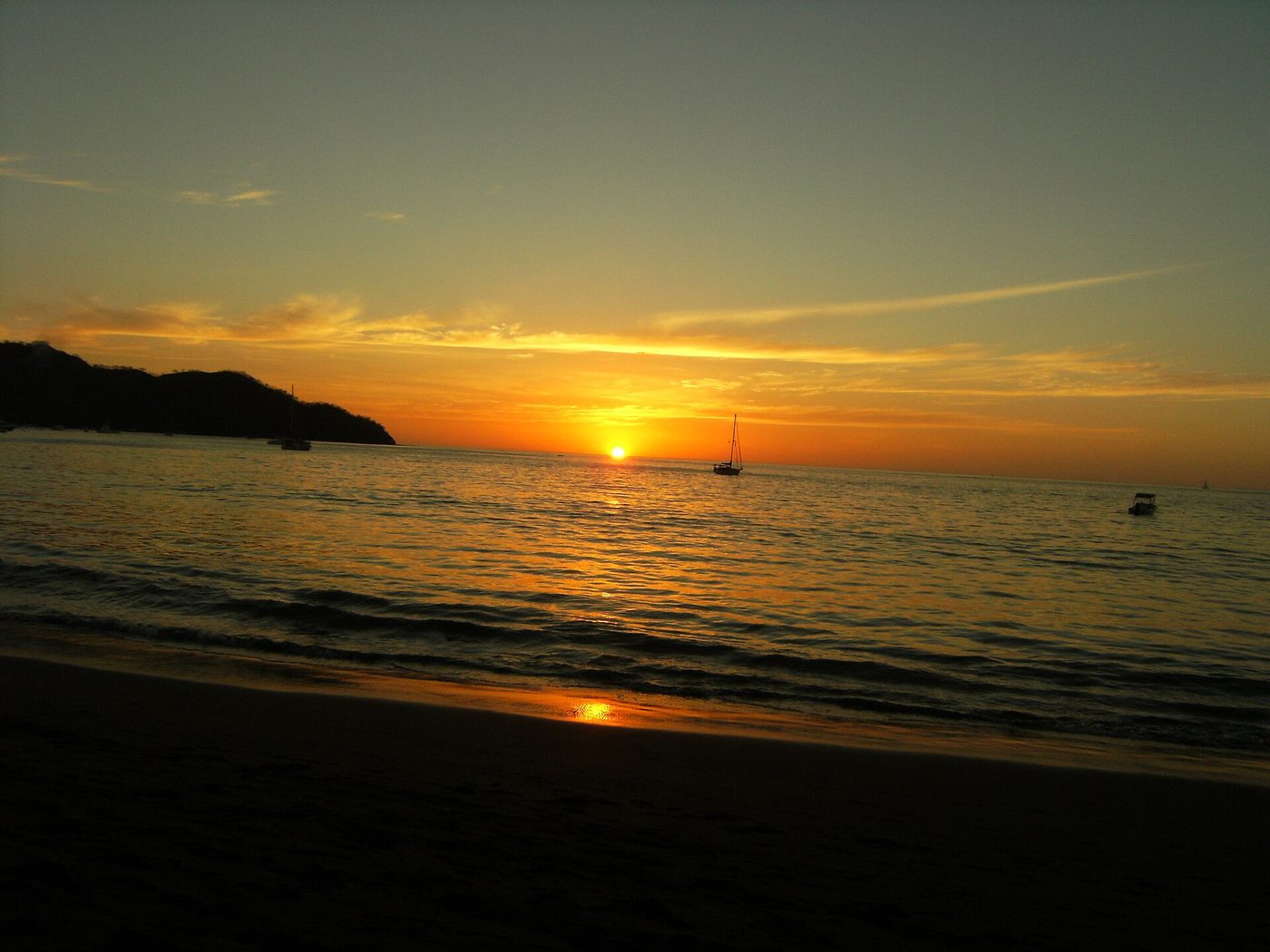
- A renovated beachfront boardwalk and public plaza where the whole town gathers at sunset
In many newer or more remote beach towns, a forgotten grocery item means a 30 to 40 minute round trip. In Coco it means a five minute walk. When something breaks in one of the rentals we manage, a plumber or electrician is usually on site the same day. That depth of local services is hard to see on a vacation and impossible to ignore once you own property.
Who actually lives here year-round?
Plenty of Guanacaste towns feel electric in February and half-empty in September. Coco stays inhabited. It is a real district with schools, churches, local businesses, and Costa Rican families whose roots here go back generations, layered with a large expat population of retirees, working families, and remote workers.
Two policy changes have strengthened that year-round base. Since late 2023, visitors from most countries can be admitted for up to 180 days as tourists, which we covered in our post on the 180-day tourist stay. And Costa Rica's digital nomad visa remains active in 2026, requiring roughly $3,000 per month in foreign income for individuals or $4,000 for families, per the current guidance summarized by Citizen Remote. Immigration rules change, so confirm the details with a licensed attorney before you plan around them. The practical effect in Coco: more people staying six months instead of six days, which supports restaurants, gyms, and services through the green season.
How does the real estate market compare with other Guanacaste towns?
Coco offers the widest spread of price points among the major beach towns. On any given month our listings run from modest condos in established communities like Las Palmas and Coco Bay, through ocean-view homes on the hillsides, up to luxury builds in Pacifico and above the bay. Titled property dominates in and around town, which simplifies purchases compared with the concession land common on some other stretches of coast.
Compared with Flamingo, Las Catalinas, or Nosara, the entry point is lower. A buyer with a mid six-figure budget has real choices in Coco, while the same budget narrows quickly in the boutique markets. Rental demand is supported by the airport, the walkability, and a tourism base that includes families, divers, sportfishers, and snowbirds rather than a single niche. We will not quote occupancy percentages here because honest numbers depend on the specific property, its pricing, and its management. If you want current figures from the 60+ rentals we manage, ask us and we will walk you through real examples. You can browse what is on the market now on our properties page.
What is there to do after the beach day ends?
More than almost anywhere else on this coast. Many Guanacaste towns go quiet by 9 p.m. Coco keeps a steady pulse: beachfront restaurants, live music several nights a week, sports bars for the game, coffee shops and bakeries in the morning, and town festivals, rodeos, and religious processions through the year. The Fiestas Cívicas in January fill the town with bull riding and street food.
It is lively without being a party town. Tamarindo skews younger and louder. Coco's evenings mix Costa Rican families on the plaza, retirees at dinner, and boat crews swapping fishing stories. If you want silence and stars, the hillside neighborhoods above town deliver that too, five minutes from the action.
Which beaches can you reach in a short drive?
Coco works as a home base for the whole northern Gold Coast:
- Playa Ocotal, five minutes south: a quiet dark-sand cove with good snorkeling around the rocks
- Playa Hermosa, ten minutes north: calm, clean, and great for swimming
- Playa Matapalo and Playa Conchal, under an hour: white and shell-sand beaches worth a day trip
- The Papagayo Peninsula, about 30 minutes: home to the Four Seasons and Andaz, and covered in our expat guide to the Papagayo region
- Witch's Rock and Ollie's Point: legendary surf breaks reached by boat charter from Coco's bay
What Playas del Coco is not
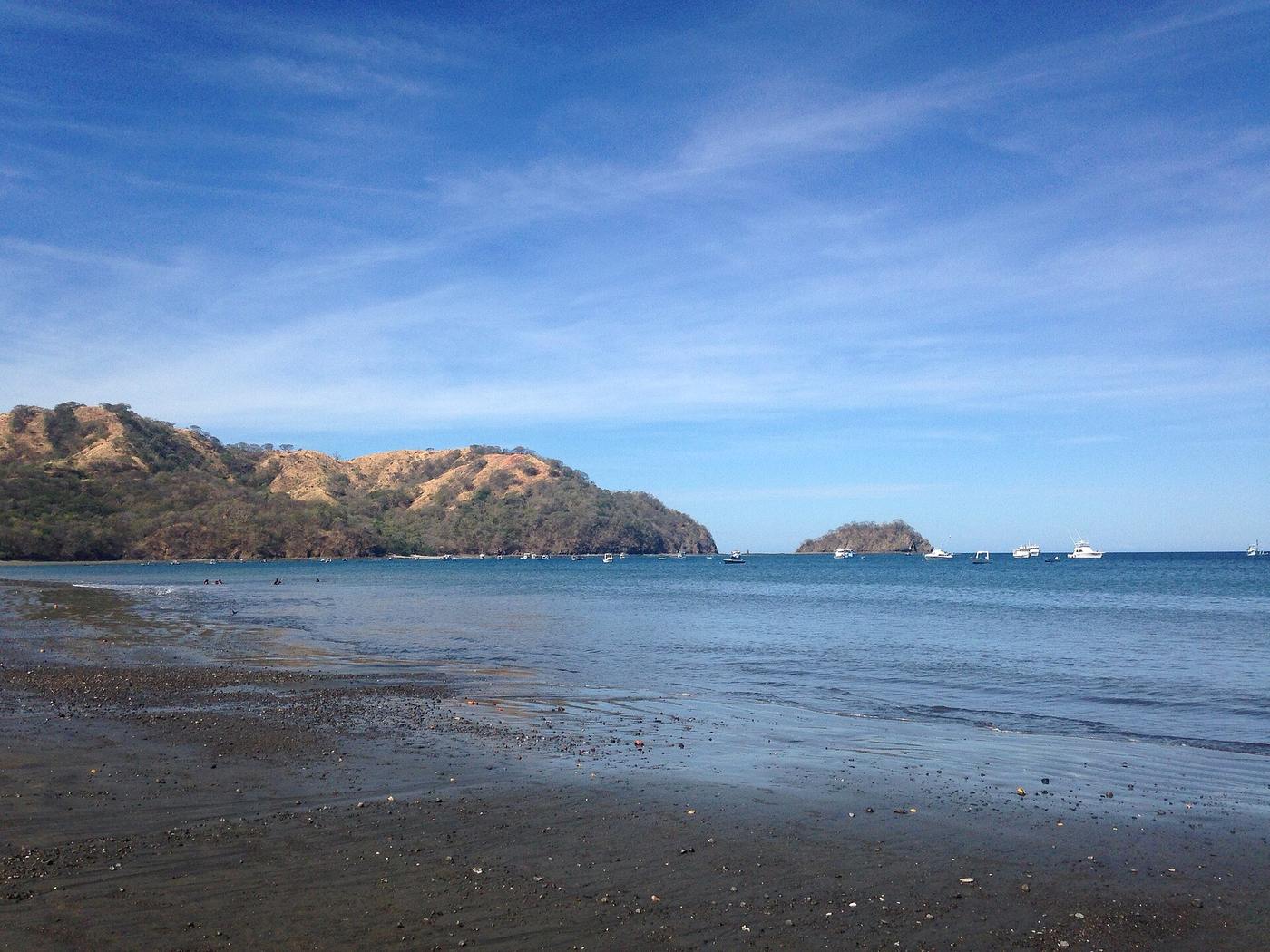
We win trust by being straight about tradeoffs, so here they are. Coco's in-town beach is gray volcanic sand on a calm bay. It is safe for swimming and beautiful at sunset, but it is not the white-sand postcard; for that you drive to Conchal. There is no surf break in the bay itself, so dedicated surfers usually choose Tamarindo, Playa Grande, or Nosara instead. The dry season landscape turns brown and dusty from February through April, and midday heat is real. And because Coco is established and popular, high season brings traffic on the main street and crowds on weekends. If your dream is an isolated jungle-backed beach with nobody on it, Coco is the wrong town, and we will tell you so.
So is Coco the right fit for you?
Choose Playas del Coco if you value convenience, community, and services over seclusion. It suits owners who fly in and out often, retirees who want clinics and groceries within walking distance, families who want Costa Rican culture alongside international neighbors, and investors who want a rental market fed by the region's busiest airport.
We are happy to give you the unfiltered version for your specific situation. Read more about living in Playas del Coco, see how we handle property management for owners, or send us a message and tell us what you are looking for. We will answer honestly, even when the honest answer is a different town.
Thinking about owning here? Start with our Playas del Coco listings and ask us anything the photos do not show.
Frequently asked questions
How far is Playas del Coco from Liberia International Airport?
About 23 kilometers (14 miles) on fully paved roads, which works out to a 25 to 35 minute drive depending on traffic through Sardinal. That makes Coco the closest major beach town to Guanacaste Airport (LIR). By comparison, Tamarindo takes well over an hour and Nosara or Samara take around two hours by car.
Is Playas del Coco a good place to buy a vacation rental?
It has real advantages: the shortest airport transfer in Guanacaste, a walkable town guests enjoy without a car, and a broad tourism base of families, divers, and snowbirds. Returns still depend on the specific property, pricing, and management. We manage 60+ rentals in Coco and Ocotal and can share current, real examples on request.
Does Playas del Coco have a nice beach for swimming and surfing?
The town beach is calm, gray volcanic sand on a protected bay, good for swimming, paddleboarding, and sunsets, but there is no surf break in the bay. Surfers charter boats from Coco to Witch's Rock and Ollie's Point or drive to Tamarindo. White-sand fans day-trip to Playa Conchal, under an hour away.
Cover photo: Chepetoño, CC BY-SA 3.0, via Wikimedia Commons · Photo: Melody Loveless, CC BY-SA 4.0, via Wikimedia Commons