Rincon de la Vieja: Volcano, Hot Springs, Waterfalls
How we plan the classic volcano day trip from Playas del Coco, with fees, trails, and honest advice.
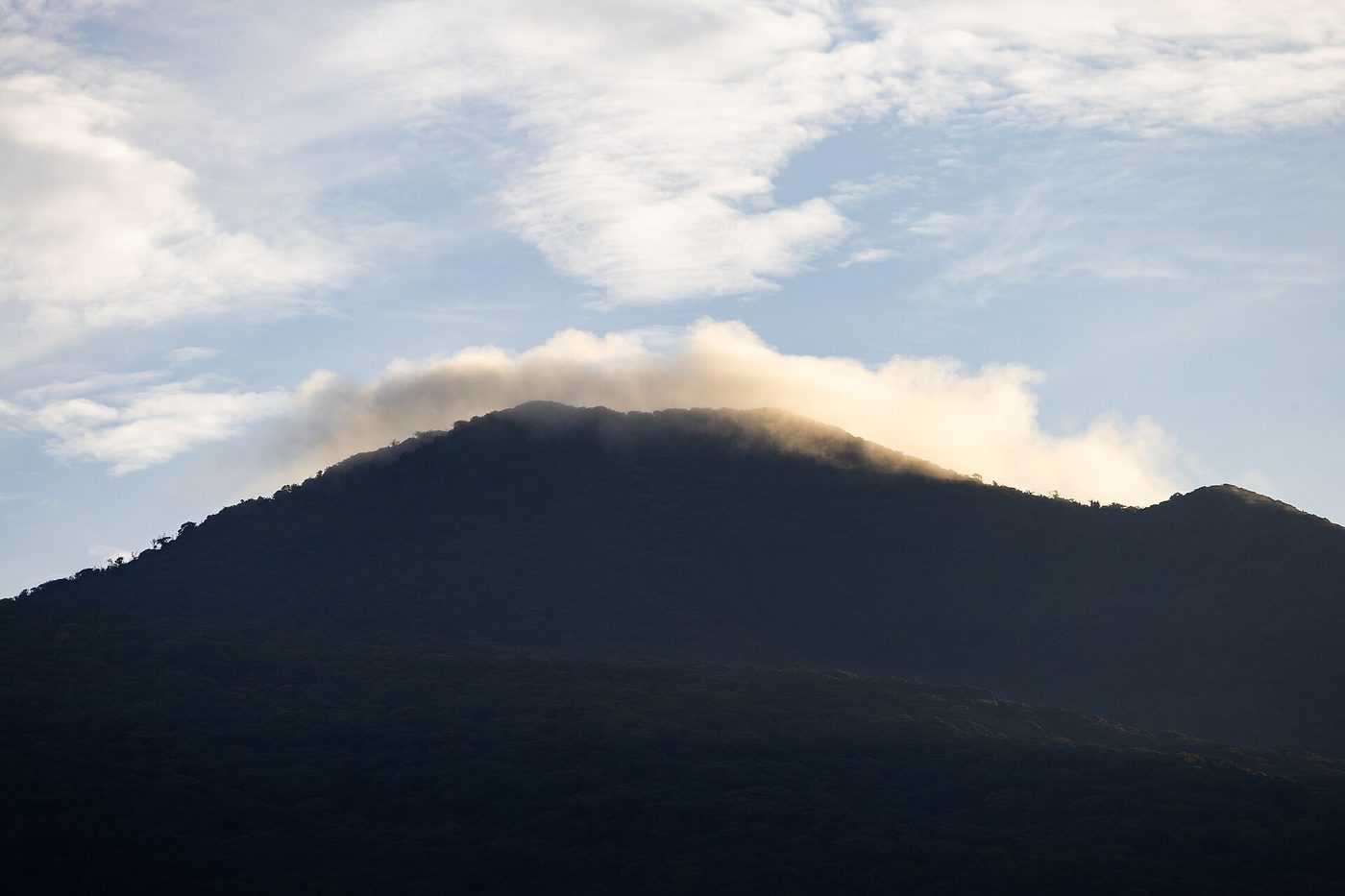
Rincon de la Vieja is an active 1,916 meter volcano about 24 kilometers northeast of Liberia, and in our opinion the single best day trip from Guanacaste's beach towns. Inside the national park you can hike past boiling mud pots, swim under waterfalls, and end the day soaking in volcano-heated hot springs.
We send guests and property owners up there all the time, usually after they have had three or four beach days and want to see a completely different Costa Rica. Here is how the mountain actually works: what is in the park, what sits just outside it, what it costs, and how we plan the day from Playas del Coco.
What is Rincon de la Vieja, exactly?
The name translates roughly as "the old woman's corner." Local legend tells of a chief's daughter whose lover was thrown into the crater. She spent the rest of her life alone on the mountain and became known as a healer, the old woman of the volcano.
Today the volcano anchors Rincon de la Vieja National Park, part of the Area de Conservacion Guanacaste, a UNESCO World Heritage Site since 1999. The wider conservation area covers about 147,000 hectares and protects some of the best remaining tropical dry forest between Central America and northern Mexico. That matters for visitors in a practical way: the forest here is open and sunny rather than dark jungle, so you actually see the landscape, and the wildlife, while you hike.
The park has two visitor sectors. Las Pailas, reached through the village of Curubande, is where nearly everyone goes and where the volcanic features are. Santa Maria, on the eastern side, is quieter and keeps its own schedule. If you have one day, Las Pailas is the sector you want.
What will you see on the Las Pailas loop?
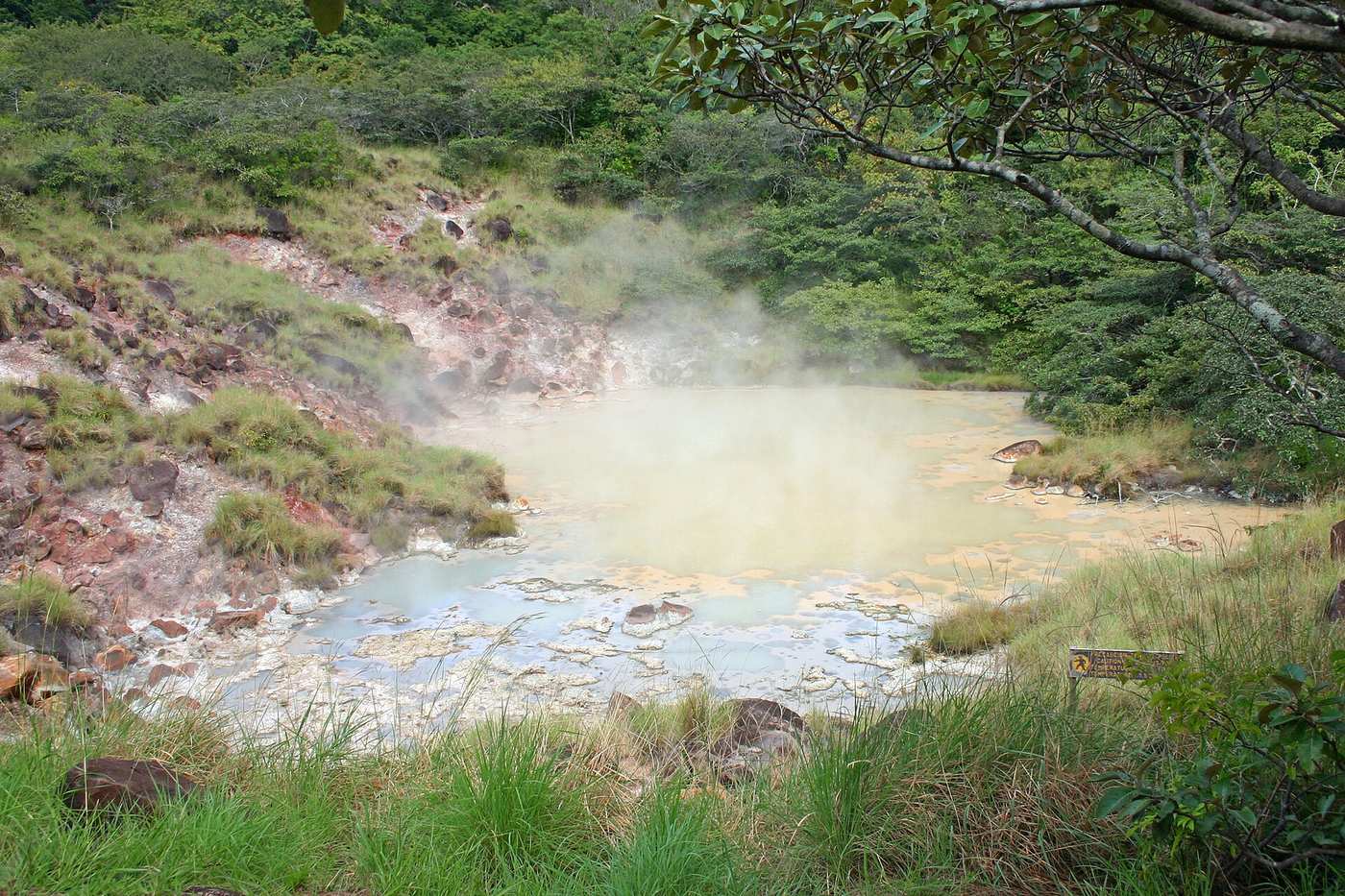
Las Pailas means "the cauldrons," and the name is literal. The main loop is a mostly flat trail of about 3.5 kilometers that passes boiling mud pots, steaming fumaroles, sulfur vents, and a miniature secondary cone the rangers call the volcancito. The ground gurgles. It smells faintly of sulfur. Kids tend to love it.
The loop takes most people around two hours with photo stops. Stay on the marked trail: the crust near the mud pots is thin and genuinely dangerous, which is why the park is strict about it. Along the way you have a good chance of spotting howler monkeys, white-faced capuchins, coatis, and plenty of birds. If you want to know what you are looking at before you go, our guide to the wildlife of Guanacaste covers the usual suspects.
One honest note: this is not a lush cloud forest walk. In the late dry season the trail is hot, dusty, and largely shadeless in stretches. Go early, wear a hat, and carry more water than you think you need.
Which waterfalls are worth the hike?
Two waterfall trails leave from the Las Pailas ranger station. La Cangreja is the famous one: a roughly 10 kilometer round trip to a waterfall dropping into a blue mineral pool where swimming is allowed. It is a real hike, four to five hours round trip, and rangers require you to start before noon so you are out before closing. Escondida, the "hidden" falls, is a shorter and less visited alternative without the swimming pool payoff.
Outside the park, Oropendola waterfall sits on Hacienda Guachipelin land near the park entrance. It is a short walk down into a canyon, there is an entry fee, and you can swim. If your group includes people who want a waterfall without a half-day hike, Oropendola is the answer.
Season matters here. The falls run fullest in the green season and can thin out noticeably by March and April. Our post on the best time to visit Costa Rica explains the tradeoff: dry season gives you reliable trail conditions, green season gives you the water.
Where are the hot springs?
The hot springs most visitors use are just outside the park on the volcano's lower slopes, where several haciendas and lodges have built pools around naturally heated rivers. The best known is Rio Negro at Hacienda Guachipelin: stone-lined pools of varying temperatures along a forest river, with volcanic mud you paint on, let dry, and rinse off. Buena Vista del Rincon runs a similar setup on its own property. Day passes and combo tickets are easy to arrange, and most operators will bundle the springs with lunch or with morning activities.
Set your expectations correctly: these are rustic river pools in the forest, not a marble spa resort. That is exactly why we like them. After a dusty morning on the Las Pailas loop, sliding into a warm river pool with howler monkeys overhead is about as good as Guanacaste afternoons get.
Is the volcano safe to visit right now?
Rincon de la Vieja is one of Costa Rica's most active volcanoes, with regular steam-driven (phreatic) eruptions from its crater lake. The summit crater trail has been closed for years for that reason, and this is not a park where you peer into the crater. The visitor sectors sit well below and away from it.
Activity picked up in mid 2026. Monitors recorded 38 phreatic eruptions between July 2 and July 24, a few of which sent mudflows down rivers on the volcano's northern flank, and authorities raised the volcanic alert to caution level in late July. The Las Pailas sector and the hot springs are on the opposite side of the mountain from those drainages, and the park manages closures conservatively. Our advice is simple: check the official SINAC park page and recent OVSICORI bulletins in the week you plan to go, and follow ranger instructions on the day. We say this as neighbors, not alarmists. The volcano rumbling is part of why the hot springs exist.
How do we plan the day from Playas del Coco?
From Coco, the drive runs through Liberia and then up through Curubande to the Las Pailas entrance, about 24 kilometers northeast of Liberia. The last stretch is gravel. We plan on roughly an hour and a half each way and leave town by 6:30 a.m., because the park opens at 8:00 a.m. and the early hours are cooler and better for wildlife. Curubande itself is a pleasant little town, and if the country feel up there appeals to you, we wrote about living in Curubande separately.
The practical details, verified as of August 2026:
- Days and hours: Las Pailas is open 8:00 a.m. to 3:00 p.m. and closed on Mondays.
- Tickets: SINAC lists foreign visitor rates at $15 for adults and $5 for children, and with tax you will pay closer to $17 per adult. Buy tickets online through SINAC's booking system before you drive up, and bring a card, not cash.
- Waterfall cutoff: start La Cangreja or Escondida before noon or the rangers will turn you around.
- What to bring: closed shoes, hat, sunscreen, at least two liters of water per person, and a swimsuit for the afternoon springs.
Our standard recipe: Las Pailas loop at opening, lunch at one of the haciendas, hot springs and mud bath in the afternoon, back in Coco in time for sunset on the beach. If you would rather not drive, every tour desk in town sells the same day as a package with transport.
Rincon de la Vieja is a big part of why we think this corner of Guanacaste beats staying inside a resort bubble. You can live at the beach and have an active volcano, waterfalls, and hot springs 90 minutes away. If you want a base for exploring, browse our vacation rentals in Coco and Ocotal, or send us a message and we will point you to the right one for your group.
Frequently asked questions
How much does it cost to enter Rincon de la Vieja National Park?
SINAC lists the foreign visitor rate at $15 for adults and $5 for children, with lower rates in colones for citizens and residents. Tax brings the adult ticket to about $17. Buy tickets online through SINAC before you arrive, since the gate does not take cash, and remember the Las Pailas sector is closed on Mondays.
Can you hike to the crater of Rincon de la Vieja?
No. The summit trail has been closed for years because the volcano produces frequent steam eruptions from its crater lake, including a run of activity in July 2026. Visitors stick to the lower trails: the Las Pailas loop past the mud pots and the waterfall trails to La Cangreja and Escondida. Check SINAC for current conditions.
How far is Rincon de la Vieja from Playas del Coco?
The Las Pailas entrance is about 24 kilometers northeast of Liberia, reached through the village of Curubande, with a gravel final stretch. From Playas del Coco we plan on roughly an hour and a half of driving each way, so leaving by 6:30 a.m. puts you at the gate for the 8:00 a.m. opening.
Cover photo: NASA/Milan Loiacono, Public domain, via Wikimedia Commons · Photo: user:Flicka, CC BY 2.5, via Wikimedia Commons