Scuba Diving in Playas del Coco: A First-Timer's Guide
Where to dive, when to go, and how to get certified in Costa Rica's diving capital.
Playas del Coco is the main scuba diving hub on Costa Rica's north Pacific coast. Several full-service dive shops run daily boat trips to more than 15 sites in the Gulf of Papagayo, plus the Catalina Islands and Bat Islands. Beginners can try a first dive here or earn an Open Water certification in two to four days.
Why is Playas del Coco the diving capital of Costa Rica?
Geography, mostly. Coco sits inside a protected bay in the Gulf of Papagayo, so boats can get out almost every day of the year. The nearest dive sites are only 10 to 20 minutes from shore by boat, which matters a lot on your first dives. Nobody enjoys a long, bouncy ride while they are nervous about breathing underwater.
The town also has real infrastructure: multiple dive shops with their own boats, rental gear, and instructors who teach in English, Spanish, and often German or Dutch. That combination of short boat rides, year-round access, and established operators is rare in Costa Rica. It is one more reason we think Coco stands apart, and we wrote a whole post on what makes Playas del Coco different from other Guanacaste beach towns.
One honest note before you book: this is Pacific diving, not the Caribbean. Visibility changes with the season and the plankton, and plankton is exactly why the big animals are here. You trade postcard-clear water for rays, sharks, turtles, and huge schools of fish. Most divers consider that a good trade.
Do I need to be certified before I arrive?
No. Every major shop in town offers a supervised try-dive (often called Discover Scuba Diving) with no experience required. You learn basic skills in shallow water with an instructor, then do a real ocean dive the same day. It is the easiest way to find out whether diving is for you.
If you want the real credential, the entry-level Open Water Diver course typically takes two to four days and certifies you to dive to 18 meters (60 feet) with a buddy anywhere in the world. According to PADI, kids can start pool programs at age 8 and earn a Junior Open Water certification from age 10, with tighter depth limits for younger divers. Families do this in Coco all the time; the calm local bays are a forgiving classroom.
Two practical tips. First, do the theory portion online before your trip so you spend vacation days in the water, not the classroom. Second, do not dive within about 18 to 24 hours of flying; plan your course for the start of your stay, not the end, and confirm the current guidance with your instructor.
What will I actually see underwater?
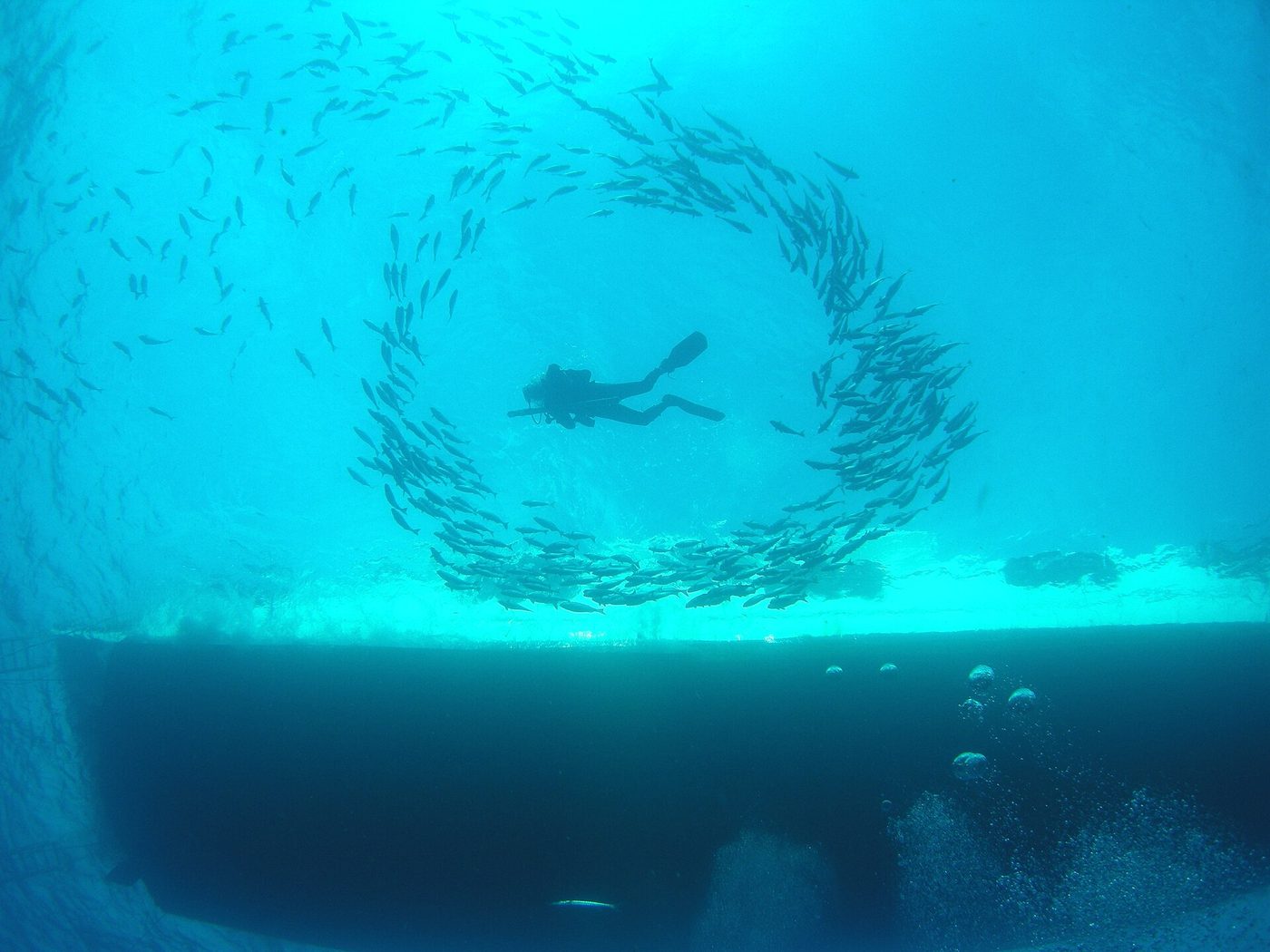
The Papagayo area is known for big animals and big schools rather than colorful coral gardens. On ordinary local dives, divers regularly report white-tip reef sharks resting under ledges, sea turtles, moray eels, and rays of several kinds: spotted eagle rays, devil rays, and golden cownose rays that sometimes pass in groups. Look closely at the rock and you can find seahorses and nudibranchs. The volume of fish is the thing that surprises first-timers; bait balls here can block out the light.
Water temperature generally runs 24 to 28 degrees Celsius (mid 70s to low 80s Fahrenheit), and local shops recommend a 3 to 5 mm wetsuit. Seasonal winds can push in cooler, greener water, especially from December through April, so ask your shop what the water is doing that week. For a land-based companion list, see our post on the wildlife of Guanacaste.
What are the Catalina Islands and Bat Islands?
These are the two trophy trips, and they are the reason serious divers keep coming back to this coast.
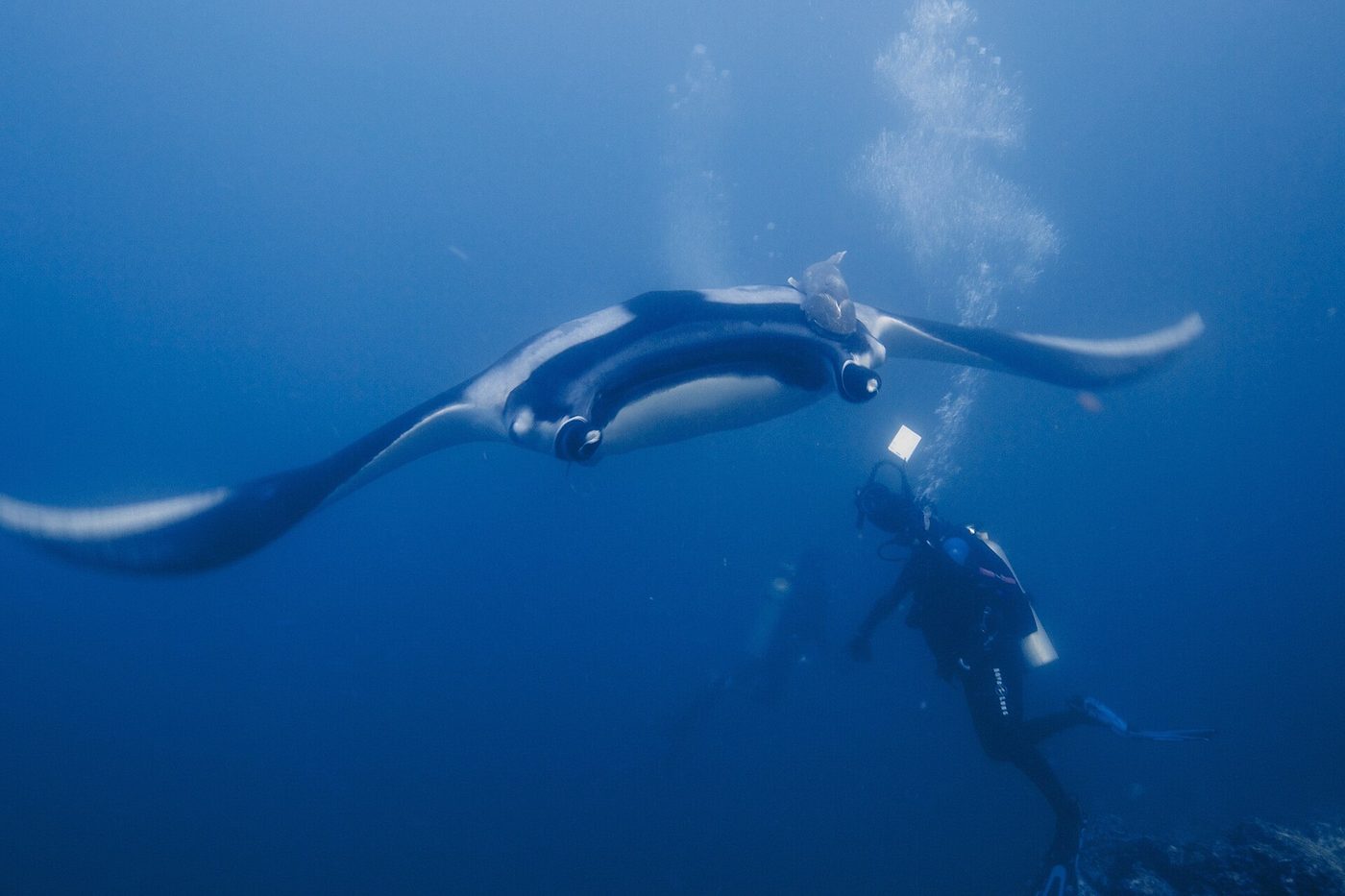
The Catalina Islands are a cluster of volcanic rock islands southwest of Coco, reached by boat from Coco, Ocotal, and nearby beaches. They are best known for giant manta rays, which cruise the cleaning stations here mainly during the dry season, roughly November through April. Even without mantas you can see huge schools of rays and plenty of sharks. Most shops ask for a certification and some recent dives, though conditions on a given day can be beginner-friendly.
The Bat Islands (Islas Murciélago) sit further north, inside the protected waters of the Área de Conservación Guanacaste, a national conservation area. This is one of the few places in the world where divers reliably encounter bull sharks, mainly in the green season, roughly May through October. It is a long boat ride and an advanced trip: deeper water, current, and big animals. Shops generally require an Advanced Open Water certification, which allows dives to 30 meters (100 feet), plus logged experience. Treat it as a goal to work toward, not a first-week outing.
When is the best diving season in Playas del Coco?
There is no bad season, just different seasons. Local shops describe it this way: the dry season (roughly November through April) brings manta activity at the Catalinas but also wind-driven cooler water on some days, while the green season (roughly May through October) brings warmer, often calmer water and the bull shark season at the Bat Islands. Many longtime divers here quietly prefer the green season. If you are planning a whole trip around it, our guide to the best time to go to Costa Rica covers the weather in more detail.
Which dive shops operate in town?
We do not run dive trips ourselves, and we have no financial stake in any shop. These are established operators our guests and neighbors use, all based in or beside Playas del Coco:
- Rich Coast Diving: operating since 1993, an SSI training center running local trips plus the Catalinas and Bat Islands, with courses from beginner through professional level.
- Deep Blue Diving: a PADI 5 Star Dive Resort about 100 meters from the beach, with daily two-tank local trips and seasonal Catalina and Bat Island runs.
- Summer Salt Dive Center: a small, family-style PADI operation, one of the longer-running dive centers on this coast, known for small groups.
Prices move around, so check current rates directly. As a rough anchor, Deep Blue advertises multi-day dive-and-stay packages starting around $440 to $465 including accommodation. Book a day or two ahead in high season; boats fill up.
Is diving a reason to live here?
For a surprising number of our buyers, yes. There are not many places where you can close your laptop at noon and be on a two-tank afternoon boat by one. Divemaster candidates, retired divers, and families with newly certified teenagers all end up in Playas del Coco partly because the ocean here is a daily option, not a vacation event. Several owners we manage rentals for first visited as divers.
If you are starting to wonder what living a ten-minute walk from the dive boats would cost, browse our current listings or send us a message through our contact page. We live here, several of us dive here, and we are happy to give you the honest version over a coffee.
Looking to buy? Browse current Playas del Coco real estate from our local team.
Frequently asked questions
Can beginners try scuba diving in Playas del Coco without certification?
Yes. Dive shops in Playas del Coco offer supervised try-dives (Discover Scuba Diving) with no experience needed. You practice basic skills in shallow water with an instructor, then make a real ocean dive the same day. If you enjoy it, the full Open Water certification course typically takes two to four days.
When is manta ray season at the Catalina Islands?
Local dive operators report giant manta rays at the Catalina Islands mainly during the dry season, roughly November through April. Sightings are never guaranteed, but devil rays, cownose rays, and white-tip reef sharks are common at the Catalinas year-round. Most shops ask for an existing certification for this trip.
How cold is the water for diving near Playas del Coco?
Water temperatures generally range from 24 to 28 degrees Celsius (mid 70s to low 80s Fahrenheit). Local shops recommend a 3 to 5 mm wetsuit. Seasonal winds from roughly December through April can push in cooler water and thermoclines, while green season months usually bring warmer, calmer conditions.
Cover photo: Emma Hickerson, NOAA / National Marine Sanctuaries, Public domain, via Wikimedia Commons · Photo: Elias Levy, CC BY 2.0, via Wikimedia Commons