Coco's Main Street: Then and Now
A walk down the one street in Playas del Coco that has seen it all, from fishing village road to busy little downtown.
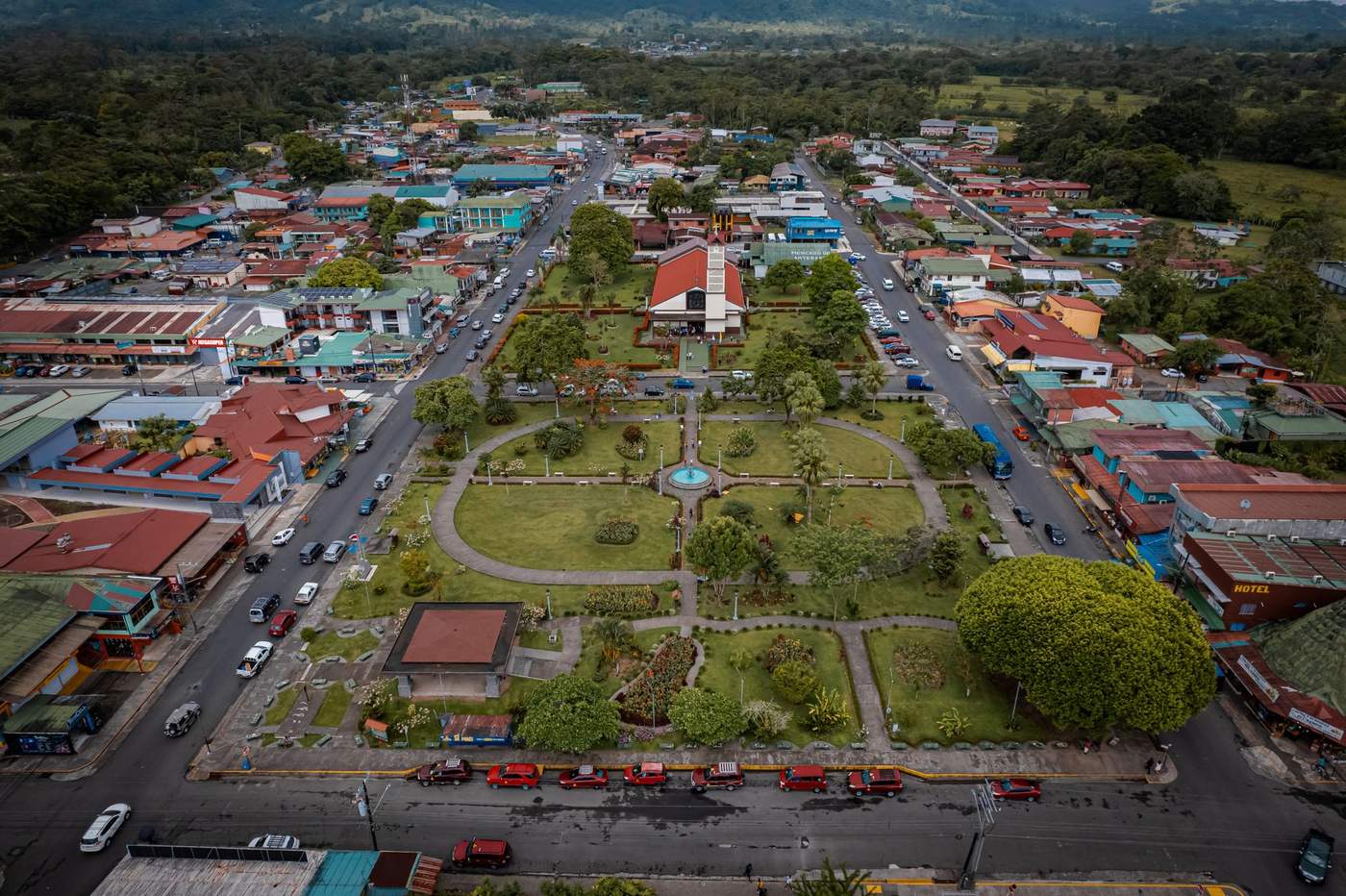
Playas del Coco's main street is the final stretch of National Route 151, which rolls in from Sardinal and ends at the sand. Forty years ago it was a dusty road through a small fishing village. Today it is the busiest little downtown in this corner of Guanacaste, lined with restaurants, banks, dive shops, and souvenir stands.
Where exactly is Coco's main street?
Route 151 leaves the Liberia highway at Comunidad, passes through the farming town of Sardinal, and drops down toward the ocean. The last kilometer, from the entrance of town to the beach, is what everyone calls the main street. It has no commercial name on any sign. Waze labels it Ruta 151. Locals just say la calle principal, and when we give directions we still use landmarks instead of addresses, which tells you a lot about how this town works.
The street ends at the beachfront plaza and the paseo, where the pavement gives way to sand and you can see the fishing boats anchored out in the bay. The little church sits just off this stretch, and almost everything a visitor or resident needs on a normal day lives within a few hundred meters of it: supermarkets, pharmacies, banks, tour desks, gelato, and more restaurants than a town this size has any right to have.
What did the main street look like before tourism?
For most of the twentieth century, El Coco was a fishing village with a beach that Costa Rican families visited on weekends. The road in was rough, the buildings were low and wooden, and the economy was fish, not visitors. We covered that early era in more detail in our post on the history of Playas del Coco, but the short version is simple: the street existed to get boats, ice, and fish between the highway and the water.
Coco had one advantage over almost every other beach on this coast, and it shaped everything that came later. It sits at the end of a direct road from Liberia, the provincial capital. No river crossings, no detours. That made it one of the first beach towns in Guanacaste that ordinary Costa Rican families could reach for a Sunday visit, decades before any foreign buyer showed up. The weekend crowds came down that same main street, and small sodas, bars, and guesthouses grew up along it to feed them.
What changed the street? The airport, mostly
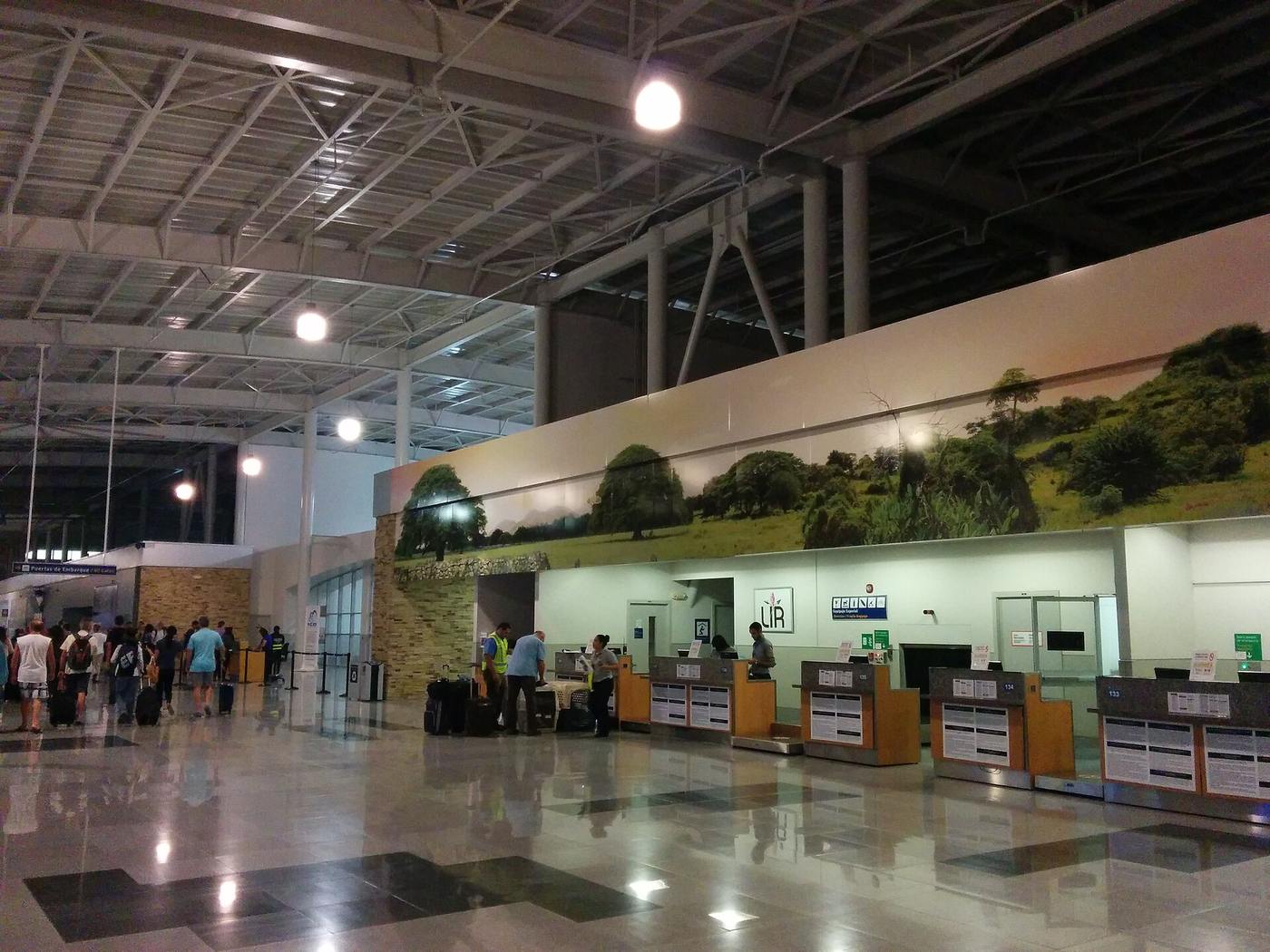
Two dates matter more than any others. In October 1995, Daniel Oduber Quirós Airport in Liberia was re-inaugurated as an international airport, and within a year it went from one weekly charter to nearly one a day. Then in January 2012 the airport opened its modern terminal, and direct flights from the US and Canada multiplied. Coco was suddenly the closest established beach town to an international gateway, roughly a 25 to 30 minute drive away.
The effect on the main street was dramatic. Condo communities like Las Palmas and Pacifico went up in the 2000s within walking distance of the strip. Banks opened branches. Supermarkets followed. The numbers back up what we watched happen: according to reporting by La Voz de Guanacaste, approved construction in the Sardinal district grew from about 52,300 square meters in 2014 to roughly 441,700 square meters in 2023, an increase of nearly 750 percent in under a decade. That is the second-fastest coastal growth in Guanacaste, behind only the Papagayo tourism pole next door.
What does downtown Playas del Coco look like now?
Walk it with us, from the top of town to the water. Near the entrance you pass modern commercial plazas with a full supermarket, clinics, and offices. Then the street tightens up and gets interesting: a sushi bar a few doors from a Tico soda serving casados, dive shops with tanks drying out front, tour operators selling catamaran trips, pharmacies, dentists who advertise in English, sportsbooks, souvenir stands, and yes, real estate offices, including people like us. In the evening the whole strip fills with a mix of Costa Rican families, tourists, and residents heading to dinner.
We will be honest about the tradeoffs, because downtown Playas del Coco is not for everyone. High season traffic can back up the one road into town. The blocks near the bars are noisy on weekend nights. Side streets still throw dust in the dry months. This is a working Costa Rican town that absorbed a tourism boom, not a manicured resort boulevard. We consider that a feature. If you want a gated hotel drive, Papagayo has those. If you want a town with a pulse, Coco has one street and it is alive from breakfast until well after dark.
What has stayed the same?
More than you might guess. The street still ends at the same spot of sand it always has, because every beach in Costa Rica remains public. The pangas still sit at anchor in the bay, and working captains still bring in fish a short walk from restaurants that will cook it that night. Locals still play soccer on the beach at sunset, exactly where the road runs out. The church still sits near the plaza. And Sardinal, ten minutes up the road, still supplies much of the workforce that keeps the whole strip running.
That continuity matters. Plenty of beach towns lose their center when tourism arrives. Coco kept its geography: one street, one plaza, one beach, everything walkable. It is a big part of what makes Playas del Coco different from other Guanacaste beach towns, and it is why the town still feels like a town rather than a development.
What does the main street tell you as a buyer or renter?
Quite a lot, actually. Walkability is rare on this coast, and it shows up in daily life and in rental performance. Guests in our managed homes consistently tell us the same thing: being able to walk to dinner, to the beach, and to a supermarket is a highlight of their stay. Owners who live here part time tell us the street is why they can get by without driving every day. If you are weighing a condo near the strip against a quiet hillside home, that is the real choice: energy and convenience on one side, views and silence on the other. There is no wrong answer, but the main street in Playas del Coco is the reference point for both. We wrote more about day-to-day life in town in our guide to living in El Coco.
We have walked this street for years, first as residents and now as the team behind 60+ vacation rentals in Coco and Ocotal. If you want to see how close a specific home or condo sits to the action (or how far from it), browse our current listings or send us a message and we will give you the honest, block-by-block answer.
Ready to see what is on the market? Explore our homes, condos and lots in Playas del Coco, every one walked in person by our team.
Frequently asked questions
What is the main street in Playas del Coco called?
It has no official commercial name. The street is the final stretch of National Route 151, the road that arrives from Comunidad and Sardinal and ends at the beachfront plaza. Locals simply call it la calle principal, or the main street, and directions in town are given by landmarks rather than street names.
Is downtown Playas del Coco walkable?
Yes, and that is unusual for Guanacaste beach towns. Restaurants, supermarkets, pharmacies, banks, dive shops, and the beach itself all sit within about a kilometer of flat ground. Sidewalks are decent on the main strip and rougher on side streets. Midday heat is real, so most people walk early or in the evening.
When did Playas del Coco start growing so fast?
Growth followed the Liberia airport, which became international in October 1995 and opened its modern terminal in 2012. The pace accelerated sharply afterward: approved construction in the Sardinal district, which includes Coco, grew nearly 750 percent between 2014 and 2023 according to reporting by La Voz de Guanacaste.
Cover photo: Edgar Arroyo, Pexels · Photo: Spikezz, CC BY-SA 4.0, via Wikimedia Commons