Independence Day in Costa Rica
What September 15 means here, and how to celebrate it well as an expat.
Independence Day in Costa Rica falls on September 15 and marks the day in 1821 when Central America declared independence from Spain. Ticos celebrate with a torch relay that crosses the whole country, lantern parades on the night of September 14, and school parades on the 15th. In 2026, Costa Rica marks 205 years of independence.
Why does Costa Rica celebrate on September 15?
On September 15, 1821, leaders in Guatemala City signed the Act of Independence that separated Central America from Spain. Costa Rica was the southernmost and most isolated province, with no roads worth the name and no fast way to send news. Word of independence traveled south by messenger and took about a month to arrive. Cartago, then the capital, held a town council session on October 29, 1821, and voted to confirm independence.
That detail explains a lot about how the holiday feels here. Costa Rica did not fight a war to break from Spain. Independence arrived quietly, by mail, and was accepted by vote. The country has leaned into that peaceful identity ever since, most famously by abolishing its army in 1948, which gets its own holiday that we covered in our post on Military Abolition Day.
Ticos do not limit the celebration to one day, either. September is the Mes de la Patria, the month of the homeland. Flags go up on houses and storefronts in the first week, schools hold civic assemblies, and school bands practice on weeknights. If you hear drums echoing across town on a Tuesday evening in early September, that is the parade taking shape.
What is the torch run (La Antorcha de la Independencia)?
The most moving tradition of the season is the torch relay. Every September, a symbolic flame is lit in Guatemala and carried by student runners down through Central America, retracing the route the news of independence traveled in 1821. The Costa Rican leg of the tradition dates to 1964, when physical education director Alfredo Cruz Bolaños organized the first relay.
The torch enters Costa Rica at the Peñas Blancas border crossing with Nicaragua, in our own province of Guanacaste, and travels roughly 378 kilometers to Cartago. According to the Ministry of Public Education, more than 22,000 students took part in the 2025 relay, each carrying the flame for about 200 meters. The torch passes through Liberia on its way south, so if you live in Guanacaste you can stand on the roadside and watch it go by. The education ministry publishes the route and arrival times for each town, so families wait along the highway with flags to cheer the runners through. It reaches Cartago on the evening of September 14.
What happens on the night of September 14?
At 6:00 p.m. on September 14, the whole country stops and sings the national anthem at the same moment. Schools, town plazas, radio stations, and plenty of living rooms all join in. The University of Costa Rica has a nice write-up on how this shared moment became a fixture of the holiday.
Right after the anthem come the faroles. Children parade through the streets carrying handmade lanterns, some simple paper affairs in red, white, and blue, others elaborate little houses, ox carts, and churches that clearly kept a parent up late. The custom recalls the story of María Dolores Bedoya, who is said to have carried a lantern through the streets of Guatemala on the night of September 14, 1821, rallying support for independence. If you have kids in a local school, expect farol construction to take over your kitchen table in early September. It is worth it.
What happens on September 15 itself?
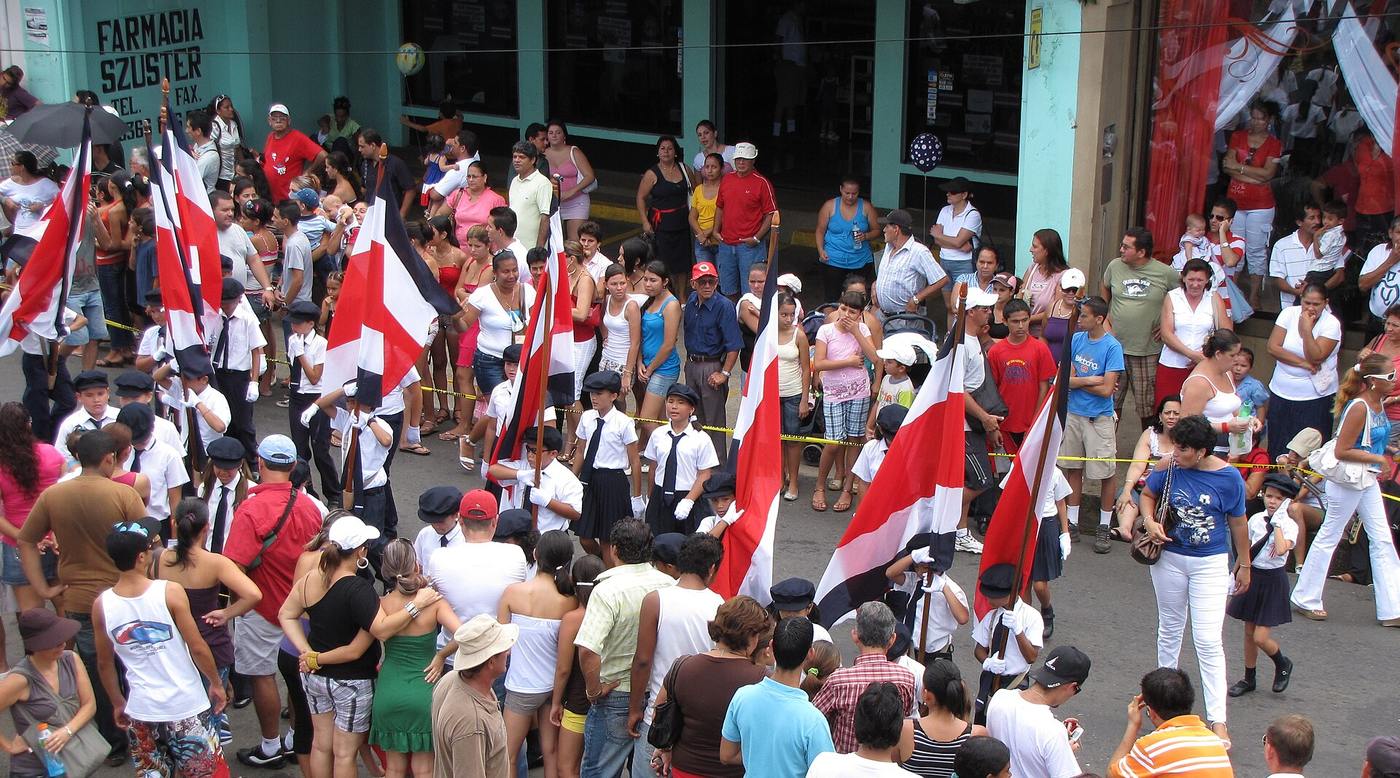
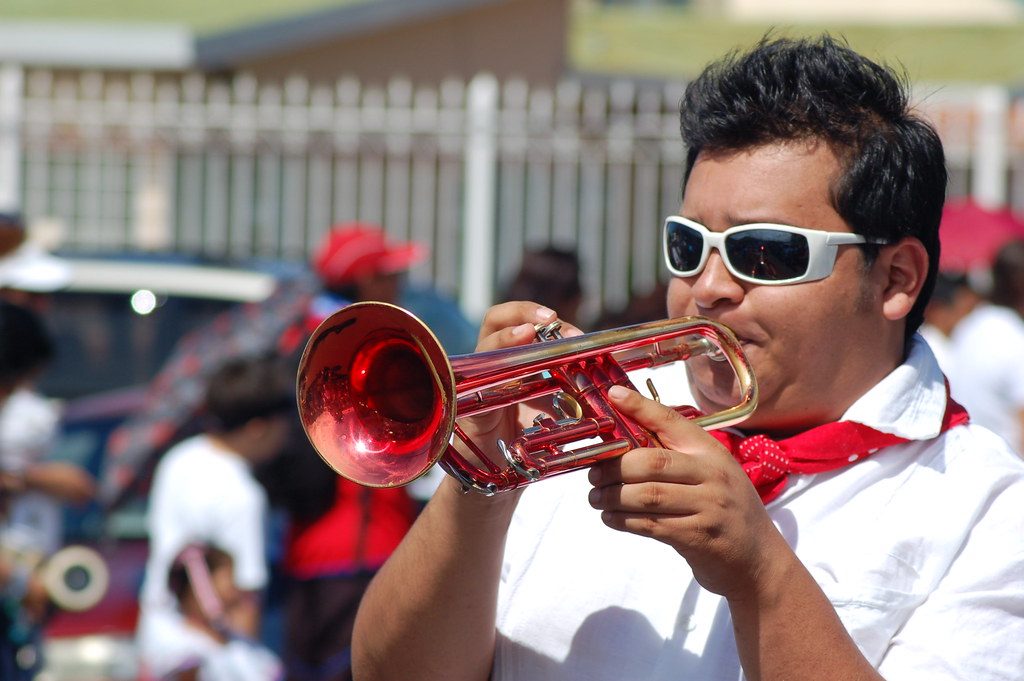
The morning belongs to the school parades. Marching bands with drums and xylophone-like liras, students in traditional dress, folk dancing, flags everywhere. Every town runs its own parade, from San José down to the smallest beach community, and families line the route to cheer for their kids. The bands spend months rehearsing, and the best of them compete for invitations to larger festivals later in the year. It is loud, sweet, and completely sincere.
September 15 is also a legal holiday with mandatory pay, and Costa Rica observes it on the actual date rather than moving it to a Monday. In 2026 it lands on a Tuesday. Expect banks, government offices, and schools to close, and plan errands around it. Main streets along parade routes close for a few hours in the morning, which in a small town can mean the only road through town.
How does Playas del Coco celebrate Independence Day?
Coco keeps it local and school-centered. Students parade along the main avenue toward the beachfront, neighbors and expats line the sidewalks, and the whole thing wraps up before the midday heat. It is not a giant festival, and we would be overselling it to claim otherwise. It is a small-town parade, which is exactly the charm. You will recognize your neighbors' kids in the band, and vendors sell shaved ice (copos) and grilled snacks along the route.
Liberia, the provincial capital about 35 minutes inland, puts on a bigger show with civic ceremonies and traditional dances. Guanacaste has its own strong regional identity layered on top of the national one, something we wrote about in our Guanacaste Day post. September here is also green season, so build a rain plan into the afternoon. For more on what daily life looks like in town, see our guide to Playas del Coco.
How can expats join the celebration?
- Go to the parade. It is free, public, and the single easiest way to feel part of the community. Bring water and a hat.
- Sing along at 6:00 p.m. on the 14th. Learning even the first lines of the anthem earns you real goodwill.
- Help make a farol. If you have children in school here, this happens automatically. If not, some community groups run lantern workshops.
- Eat the food. Tamales, chorreadas, arroz con pollo, and gallo pinto show up at every community event in September.
- Support the schools. The parades are school-led, and the bands always need instruments and uniforms. A donation goes further here than almost anywhere.
Children carry a lot of this holiday, from the torch relay to the faroles, and Costa Rica takes its young people seriously the rest of the year too. Our post on Children's Day in Costa Rica covers another September tradition worth knowing.
Thinking about being here for the next one?
September is one of our favorite months in Coco. The hills are green, the town is quiet, and Independence Day gives you a genuine look at the community you would be joining. If you want to see what living here could look like, browse our current listings or send us a message. We live here year-round and are happy to share what the holiday is really like.
Frequently asked questions
Is September 15 a public holiday in Costa Rica?
Yes. Independence Day is one of Costa Rica's mandatory paid holidays, and it is observed on the actual date rather than being moved to a Monday. In 2026 it falls on a Tuesday, September 15. Banks, government offices, and schools close, and parade routes shut main streets for part of the morning, so plan errands and driving around it.
What time do Costa Ricans sing the national anthem on September 14?
At 6:00 p.m. sharp on September 14, people across the country sing the national anthem at the same moment, in schools, plazas, and homes, and on national radio. The lantern parades (desfiles de faroles) begin right afterward, with children carrying handmade lanterns through the streets. If you attend one event all season, make it this one.
Can tourists and expats attend Independence Day parades in Costa Rica?
Absolutely. The parades are free, public, family events, and visitors who show up and cheer are welcomed warmly. Arrive early for shade and parking, expect road closures along the route, and bring water. In beach towns like Playas del Coco the parade is small and finishes by midday; Liberia hosts the largest celebration in Guanacaste.
Cover photo: Andrés Berrocal Soto, CC BY-SA 3.0, via Wikimedia Commons · Photo: thombo2, CC BY 2.0, via Openverse