Sport Fishing from Coco: Seasons, Charters, What You'll Catch
A local season calendar, what the boats really catch, and how charter days work from our bay.
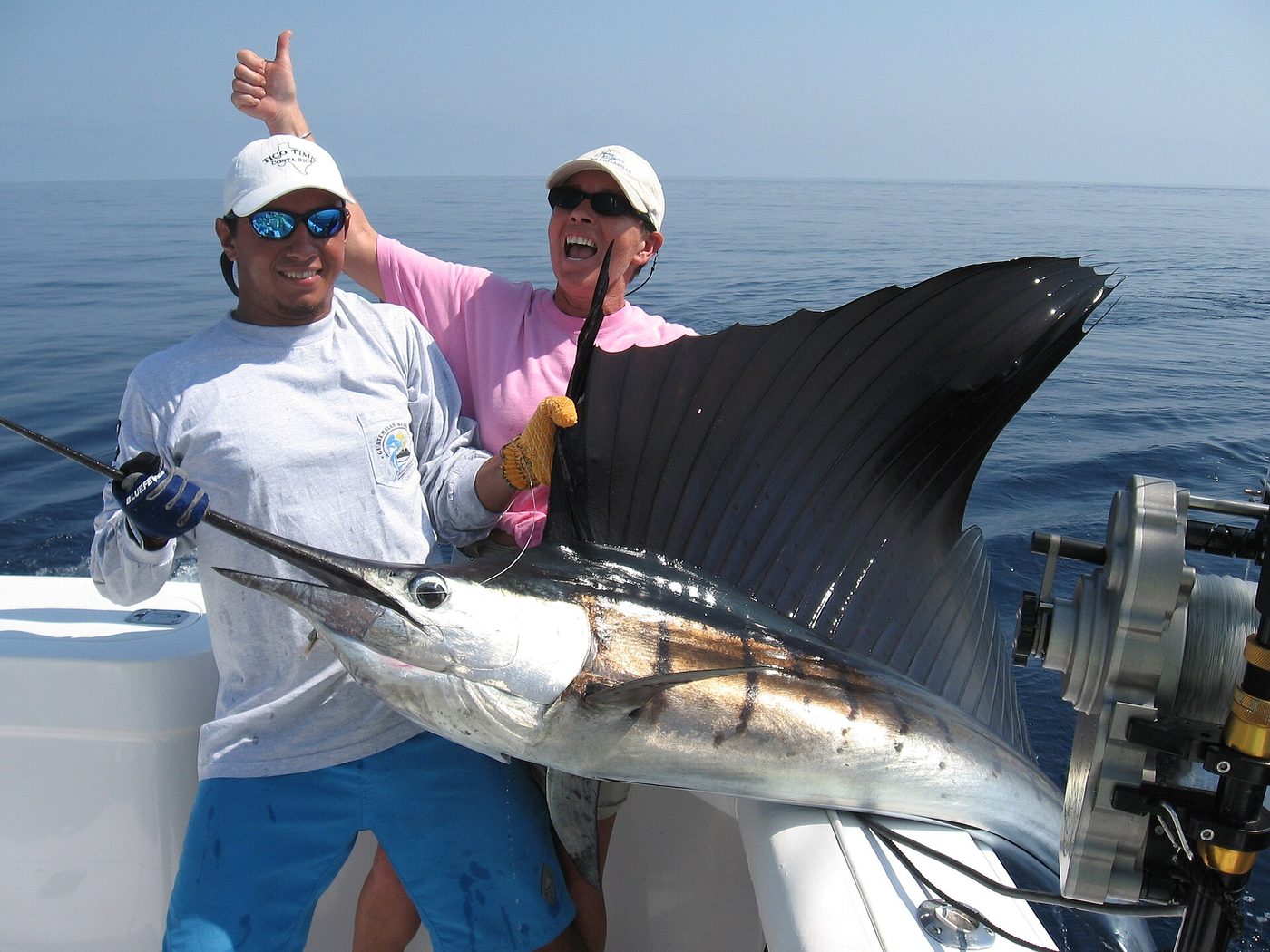
Sport fishing in Playas del Coco runs all year. Sailfish peak from May through August, marlin from June through September, and dorado arrive with the rains from late May into October. Roosterfish bite inshore every month. Charters load right off the beach, with half day trips inshore and full days out in blue water.
Why is Coco a real fishing town?
Before the condos and the beach bars, Coco was a fishing village, and it never stopped being one. The panga fleet still anchors in the bay, and sport boats sit on moorings a few hundred yards off the sand. There is no marina in town: captains run skiffs to the beach, you wade a few steps, and you are aboard. Some larger boats keep slips at Marina Papagayo on the gulf, but for most visitors the day starts with sandy feet at the main beach entrance. We wrote more about those roots in our history of Playas del Coco.
Costa Rica's tourism board lists Coco and Ocotal among the country's favorite fishing spots and notes that Guanacaste produces marlin all year long (visitcostarica.com). The geography explains it. The continental shelf drops away fast here, so boats reach productive water quickly, and the Catalina Islands, a famous inshore zone, sit 30 minutes or less from the beach.
When is the best season for each species?
Here is the calendar the local fleet actually fishes by. It comes from charter operators working these waters, including Dream On Sport Fishing, a Playas del Coco operation whose captains also file regional reports for FECOP, Costa Rica's sport fishing federation.
- Sailfish: caught in every month of the year in the northern waters, with May through August normally the top stretch.
- Marlin: present year round, exceptional from June through September, then slower from October into early January. Blues, blacks, and striped marlin all show here.
- Yellowfin tuna: a genuine year round fishery. Schools of footballs in the 12 to 20 pound class are common, with 40 to 60 pounders mixed in and much bigger fish on the long range grounds.
- Dorado (mahi mahi): most abundant from late May through October, when seasonal rains push debris lines offshore.
- Wahoo: first push arrives with the May rains, peaking in July and August.
- Roosterfish: available all year inshore, most plentiful from November through March. Fish in the 60 to 80 pound class are caught regularly in the Papagayo area.
Notice the pattern: the green season, roughly May through October, is prime time offshore. Visitors who plan around perfect beach weather often miss the best fishing. If you are weighing dates, our guide to the best time to visit Costa Rica covers how the seasons work.
One more local variable: the Papagayo winds. From roughly December through April, strong offshore winds funnel across the isthmus and out over these waters, part of the same dry season wind pattern FECOP describes concentrating baitfish and billfish along the Pacific. For anglers that means dry season mornings can be breezy and the ride sportier, while green season seas are often calmer. Captains here plan around it every day.
What will you actually catch on a typical day?
In the peak months, a full day offshore commonly produces a mixed bag: a sailfish or marlin bite, yellowfin tuna, dorado, and sometimes wahoo on the troll. A September report from the Papagayo area described striped marlin around 250 pounds and blue marlin from 300 to 500 pounds being released, alongside a strong wahoo bite. Inshore, half day trips target roosterfish, plus rock snapper and cubera snapper along the volcanic points. Nothing is guaranteed in fishing, and any honest captain will tell you that. Slow days happen, especially when dirty water or wind moves through.
How does a charter day from Coco work?
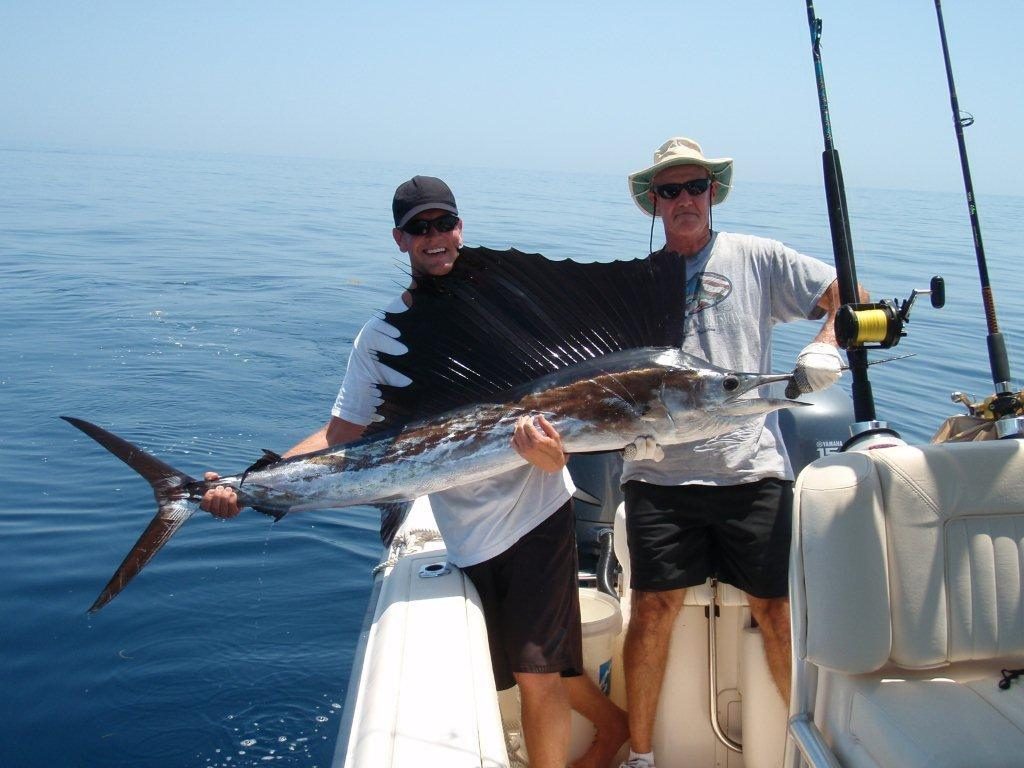
Local boats generally run two formats. Half day trips, around four hours, stay inshore for roosterfish, snapper, and whatever is busting bait near the islands. Full days, around eight hours, head offshore for billfish and tuna. Coco's fleet ranges from open center consoles around 27 feet up to cabin boats in the 40 foot class, and long range tuna programs can run 80 miles or more. Verified local operators include Dream On Sport Fishing and North Pacific Tours, which also runs surf trips to Witch's Rock. Most boats include tackle, bait, a mate, and drinks; many include lunch on full days. Confirm the details in writing before you book, and confirm the beach pickup point. Boats will also collect guests in Ocotal and Playa Hermosa by arrangement. Bring reef safe sunscreen, a hat, motion sickness tablets if you are unsure of your stomach, and cash for the crew tip. Kids do well on the calmer half day inshore trips.
Prices move with fuel, boat size, and season, so we will not quote numbers that may be stale by the time you read this. Get two or three current quotes and compare hours, boat size, and what is included.
Do you need a fishing license in Costa Rica?
Yes. Every person fishing needs a license from INCOPESCA, the national fisheries institute, and this applies to charter guests. Licenses come in short term versions valid up to 8 days, plus one month and one year options, and can be purchased online through incopesca.go.cr. In practice, most charter captains handle licenses for their guests or walk you through the purchase. Ask when you book rather than assuming it is included.
Why does catch and release matter here?
Billfish are the backbone of this coast's economy, and the sport fishing community treats them that way. FECOP, the federation that represents sport and recreational fishing in Costa Rica, reports that the sector adds over 520 million dollars a year to the national economy and supports more than 33,000 direct and indirect jobs. Sailfish and marlin are released on virtually every charter out of Coco, usually boat side without lifting the fish. If a crew ever suggests keeping a billfish, that is not normal practice here. Tuna, dorado, and wahoo are another story: they are excellent eating, and most crews will clean your catch, and several restaurants in town will cook it for you the same night.
Is Coco a good base if you want to fish often?
This is where we put our real estate hat back on, honestly. If fishing is a big part of your Costa Rica plan, Coco is one of the most practical bases in Guanacaste: a year round fishery, a working fleet ten minutes from most neighborhoods, an international airport about 45 minutes away in Liberia, and a real town with banks, clinics, and supermarkets behind it. Plenty of our owners rent their homes to traveling anglers in the green season, when fishing peaks but tourist demand softens. For the bigger picture on the area, see our expat guide to the Papagayo region.
If you are curious what living a ten minute walk from the fleet costs, browse our current listings in Coco and Ocotal, or send us a message. We live here, several of us fish, and we are happy to point you to a good captain even if you never buy a thing.
Frequently asked questions
What is the best month for sailfish fishing from Playas del Coco?
Sailfish are caught from Coco in every month, but local charter calendars put the peak from May through August. Marlin fishing is strongest from June through September. If you want the widest mixed bag, sailfish plus tuna, dorado, and wahoo, aim for the green season months between May and October.
Do I need a fishing license for a charter in Costa Rica?
Yes. Everyone who fishes needs a license from INCOPESCA, Costa Rica's fisheries institute, including charter guests. Short term licenses valid up to 8 days are available, plus monthly and annual options, and you can buy them online at incopesca.go.cr. Most captains arrange licenses for guests, but confirm that when you book.
How far do fishing boats from Coco travel to find fish?
Less far than in many destinations. The Catalina Islands, a productive inshore zone, sit 30 minutes or less from the beach, and half day trips stay close to shore. Full day offshore trips run to blue water for billfish and tuna, and dedicated long range tuna trips can travel 80 miles or more.
Cover photo: Costaricapro, CC BY-SA 3.0, via Wikimedia Commons · Photo: WIDTTF, CC BY-SA 2.0, via Wikimedia Commons