The Annexation of Guanacaste: Why the Province Almost Wasn't Costa Rican
How an 1824 town council vote moved a poor cattle district from Nicaragua's orbit to Costa Rica and gave the country its Gold Coast.
The annexation of Guanacaste began on July 25, 1824, when residents of the Partido de Nicoya voted at an open town council to join Costa Rica instead of Nicaragua. Nicoya and Santa Cruz said yes, the town of Guanacaste (today's Liberia) said no, and the border dispute that followed took decades to settle.
We write about this history because we live with it. Playas del Coco sits on land that was governed from Nicaragua for most of the colonial era. Every July the province reminds itself, with parades, marimba, and a day off work, that it chose to be here. As origin stories go, this one is unusual: no battle, no conquest, just a town meeting and a vote. Here is the full story of the annexation of Guanacaste, including the parts most summaries skip.
What was the Partido de Nicoya?
Guanacaste as we know it did not exist in 1824. The territory between the La Flor River in the north and the Gulf of Nicoya in the south was called the Partido de Nicoya, a rural district first organized in 1554 as a corregimiento under the Captaincy General of Guatemala. In 1787 the Spanish Crown attached it to the Intendancy of León, in what is now Nicaragua. The administrative reforms that followed Spain's 1812 constitution turned it into the Partido de Nicoya, a district with a measure of self-government and three towns that mattered: Nicoya, Santa Cruz, and a cattle town called Guanacaste, which you know today as Liberia.
It was a small place. Population figures compiled in the historical record of the annexation put Santa Cruz at about 2,500 residents, Nicoya at just under 2,000, and the town of Guanacaste at roughly 1,400. The economy ran on cattle haciendas and small farms. There was no real port, no road worth the name, and very little money.
Why did Nicoya vote to join Costa Rica in 1824?
When Central America declared independence from Spain in 1821 (we covered that story in our post on Independence Day in Costa Rica), the old colonial borders suddenly became negotiable. The new provinces joined the Federal Republic of Central America, and districts like Nicoya had to decide where they belonged.
Nicaragua made the decision easier by descending into civil war, with the cities of León and Granada fighting for control. Meanwhile, Nicoya's economy already pointed south. Cattle, grain, and trade moved toward Puntarenas, Costa Rica's Pacific port, not north toward the fighting. The annexation act itself spelled out the reasons: the advantages of free trade through Puntarenas, the poverty of the district, the security threat from the war next door, and shared interests with Costa Rica.
So on July 25, 1824, an open town council, a cabildo abierto, met in Nicoya and voted to join Costa Rica. Santa Cruz backed the decision. Counting the towns together, roughly 77 percent of the Partido's population supported incorporation. The province's official motto still records the moment: De la patria por nuestra voluntad, meaning of the homeland by our own will.
Which town said no?
The town of Guanacaste, now Liberia, declined. Its trade and family ties ran north to Rivas, in Nicaragua, and joining Costa Rica meant turning its back on those connections. The refusal did not last long. In March 1825 the Congress of the Federal Republic of Central America passed a law confirming the annexation, and the town of Guanacaste came in with the rest of the district.
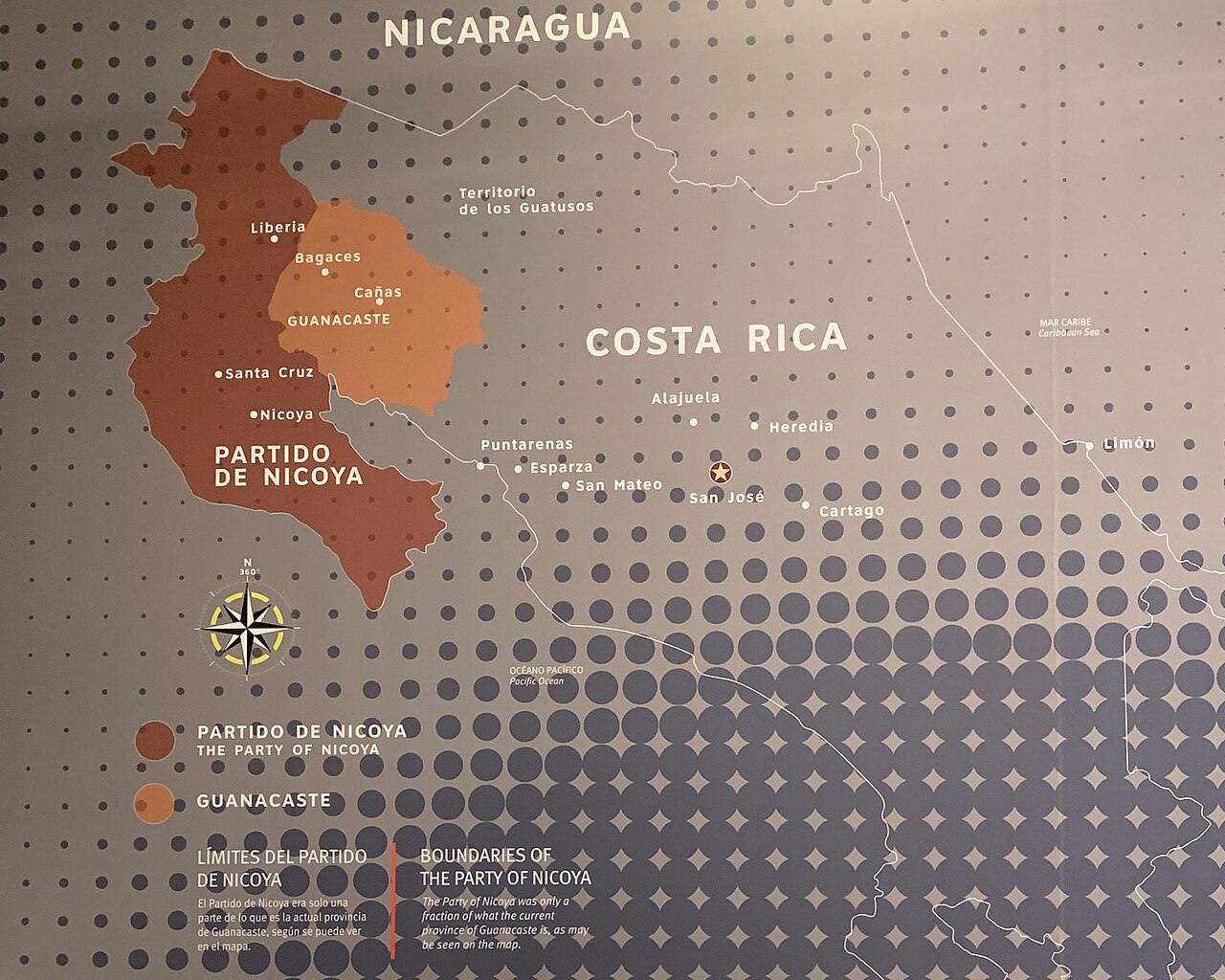
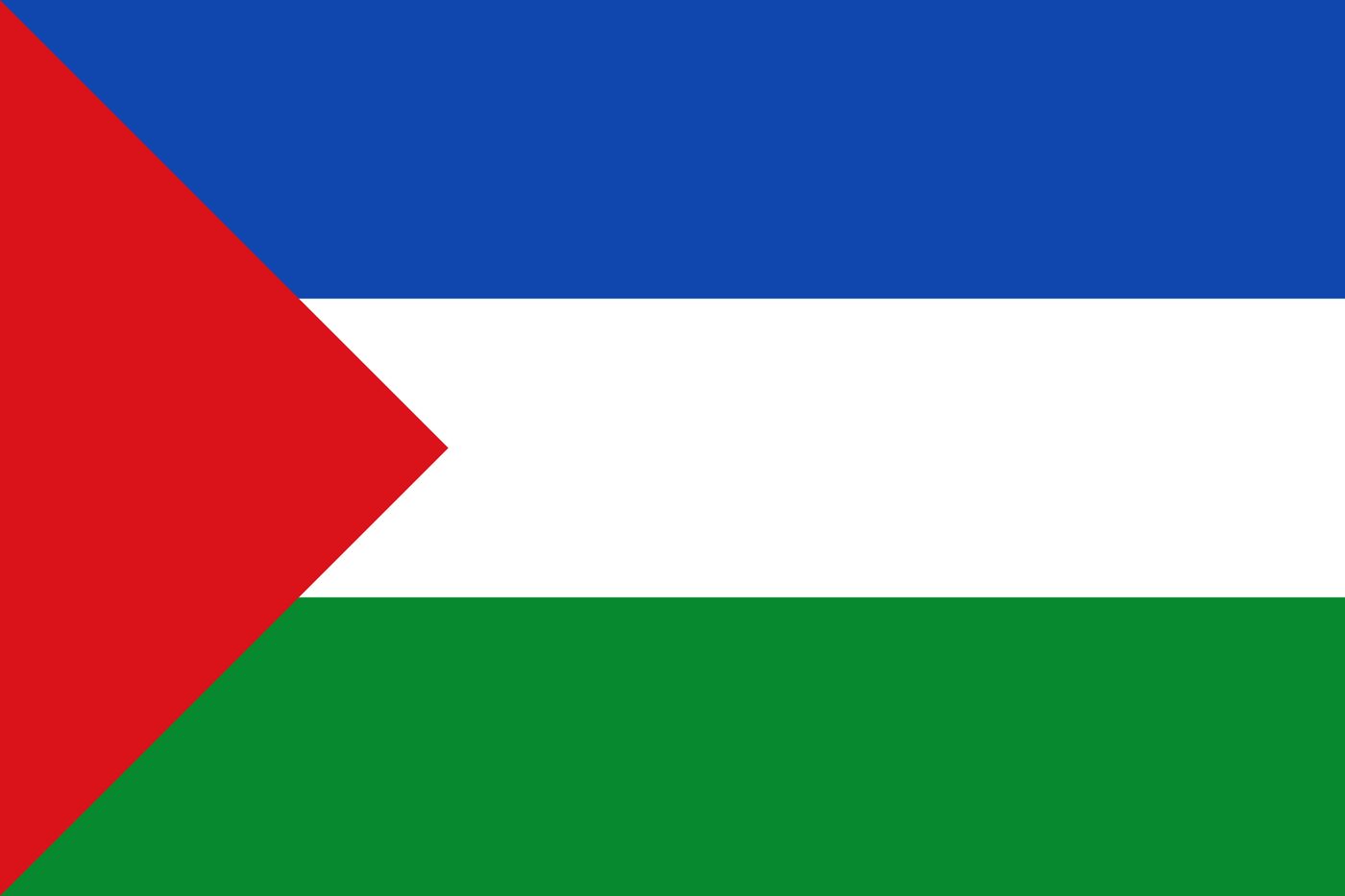
One detail that surprises people: the Partido de Nicoya was only part of today's province. The lands around Liberia, Bagaces, and Cañas were administered separately at the time, a distinction the National Museum of Costa Rica illustrates with the boundary map you see at the top of this post. The modern province of Guanacaste was assembled later from both pieces.
Did Nicaragua ever accept the annexation?
Not quickly, and this is why the province almost wasn't Costa Rican. Nicaragua disputed the annexation of Guanacaste for more than three decades, and the question stayed genuinely open: a different treaty, or a different war, could have redrawn the line. The matter was finally settled on April 15, 1858, when the two countries signed the Cañas-Jerez Treaty. Costa Rica kept Nicoya and Guanacaste, and the border was fixed along the San Juan River, with navigation rights for Costa Rica on the water.
Nicaragua later challenged the treaty's validity, so both countries submitted the question to arbitration by US President Grover Cleveland. His award of March 22, 1888 upheld the treaty. The border has been settled law ever since, even if the two neighbors still argue about details of the San Juan River from time to time.
How did the province get its name, then lose it for six years?
The town of Guanacaste took its name from the giant guanacaste trees that shaded travelers on the old cattle routes. The province eventually took the same name, but not in a straight line. On May 30, 1854, a government decree renamed the City of Guanacaste as the City of Liberia. At the same time the province's name was changed to Moracia, honoring then-president Juan Rafael Mora Porras.
Politics being politics, the honor did not survive its namesake's fall from power. On June 20, 1860, the province's name was switched back to Guanacaste. Liberia kept its new name and remains the provincial capital today, which is why the airport most of our buyers fly into carries Liberia's name rather than Guanacaste's.
Why does July 25 still matter in Guanacaste?
July 25 is Guanacaste Day, a national holiday in Costa Rica. Liberia and Nicoya host the biggest celebrations: civic parades, topes (horse parades), marimba music, folk dancing, and traditional food. If you want the festive side of the story, we wrote about why expats love celebrating Guanacaste Day and what to expect if you are here for it.
The deeper meaning is identity. Guanacastecos are proud that their province joined Costa Rica by choice, and the culture here still feels distinct from the Central Valley: drier land, cattle country, slower speech, and a strong folk tradition. The annexation is also, very practically, the reason the beaches of the Papagayo coast are Costa Rican at all. Without the 1824 vote, the fishing village that became Playas del Coco would sit on the Nicaraguan side of the line.
What does this history mean if you are buying here?
Two things, one practical and one cultural. The practical one: Guanacaste has been under Costa Rican law for 200 years, and the border question has been closed since 1858. Property here sits in the same National Registry as property in San José, under the same title system. The cultural one: this province chose its country, and it keeps its own character inside it. If you move here, you are moving to Guanacaste as much as to Costa Rica, and we mean that as a compliment.
We are Expat Properties | CR. We live in Playas del Coco year round, we sell homes across the province, and we manage 60+ vacation rentals in Coco and Ocotal. If this corner of Costa Rica interests you, browse our current listings, read more about Playas del Coco, or send us an inquiry. We are happy to talk history too.
Frequently asked questions
When was Guanacaste annexed to Costa Rica?
The vote took place on July 25, 1824, at an open town council in Nicoya, where the Partido de Nicoya chose to join Costa Rica. The Congress of the Federal Republic of Central America confirmed the annexation by law in March 1825. Costa Rica celebrates the date every year as Guanacaste Day, a national holiday.
Was Guanacaste ever part of Nicaragua?
Under Spanish rule the district was attached to the Intendancy of León, in present-day Nicaragua, from 1787. After the 1824 vote, Nicaragua disputed the annexation for decades. The Cañas-Jerez Treaty of 1858 fixed the border, and an arbitration award by US President Grover Cleveland upheld that treaty in 1888.
What does 'De la patria por nuestra voluntad' mean?
It translates as 'of the homeland by our own will' and is the official motto of Guanacaste province. It refers to the fact that the region joined Costa Rica through a voluntary vote in 1824, not through conquest or a forced treaty, which remains a real point of pride for Guanacastecos.
Cover photo: Mariordo (Mario Roberto Durán Ortiz), CC BY-SA 4.0, via Wikimedia Commons · Photo: Jaume Ollé, Public domain, via Wikimedia Commons