From Fishing Village to Expat Hub: How Playas del Coco Changed in 50 Years
How a quiet Guanacaste fishing town became the expat capital of the Gold Coast, told through the dates that actually mattered.
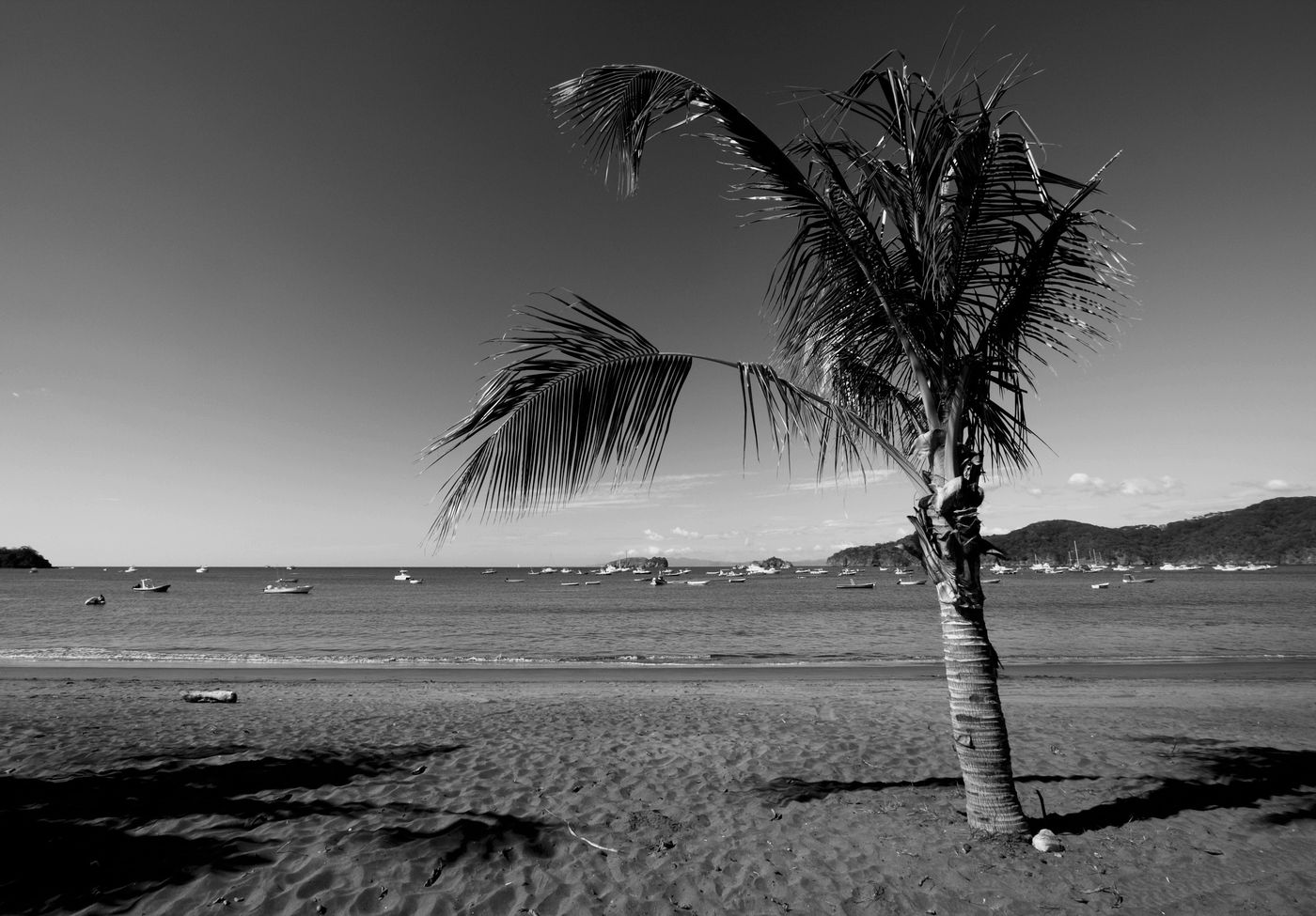
Playas del Coco before tourism was a small fishing village where pangas outnumbered cars and the beach was the town's workplace. Over roughly 50 years, a tourism development law, an international airport, and a wave of North American residents turned it into Guanacaste's busiest expat hub. The fishing boats, to their credit, never left.
What was Playas del Coco before tourism?
Picture the bay in the mid 1970s. A crescent of gray volcanic sand, a line of wooden pangas pulled up past the tide mark, and a cluster of homes and sodas along dirt roads. Fishing was the main livelihood, and long before that, the Chorotega people fished and farmed this same coast. There was no marina, no condo tower, no gelato shop. Supplies came from Sardinal or Liberia, and electricity and phone lines were far from a given.
Daily life ran on the tides. Boats went out early, the catch came in before the heat, and afternoons belonged to repairs, nets, and shade. Kids grew up swimming in the same bay their fathers worked. It was a hard living, but it was a town with a purpose, and that purpose was the sea.
We cover the deeper backstory, from Chorotega settlement through the Spanish colonial period, in our post on the history of Playas del Coco. The short version: for most of its existence, this was a working coco fishing village that the outside world had little reason to visit.
Why did Costa Ricans find Coco first?
Here is the part many newcomers miss. Coco's first tourists were not Americans or Canadians. They were Costa Rican families, mostly from San José, who drove out for beach weekends because Coco had something rare on this coast: a road you could actually reach the sand on. That head start shaped the town's character. Coco developed a boardwalk culture, weekend ferias, and a strong Tico identity that persists today.
This is why Coco feels different from planned resort towns nearby. It was a real Costa Rican town before it was a destination, and it still is one. If you have read our post on what makes Playas del Coco different from other Guanacaste beach towns, this history is the reason behind most of the differences.
How did the Papagayo project start the transformation?
The first big lever of change was pulled in San José, not in Coco. On July 31, 1979, Costa Rica passed Law 6370, declaring the Gulf of Papagayo tourism development of public interest. The project set aside about 1,658 hectares of coastline just north of Coco, held by the state, with the Costa Rican Tourism Institute (ICT) granting long term concessions to hotel and resort developers. Regulations followed under Law 6758 in 1982, and the master plan framework was published in 1995. You can read the official outline on the ICT's Papagayo development page.
Progress was slow for years, but the direction was set: the peninsula next door would become one of Central America's flagship resort zones, and Coco would become its service town, supply base, and nightlife district. For a fuller timeline of the whole area, see our pillar guide, Playas del Coco: Past and Present.
What did the Liberia airport change?
If the Papagayo project drew the map, the airport delivered the people. Liberia's Daniel Oduber Quirós Airport was re-inaugurated as an international airport in October 1995, and according to the airport's development history, it went from one weekly charter flight to almost one per day within a year. Scheduled service from the United States and Canada followed, and a new passenger terminal opened in January 2012 to handle the growth.
For Coco, this was the single biggest practical change in 50 years. The town sits about half an hour from the runway. A retiree in Toronto or Houston could suddenly leave home in the morning and be swimming in Coco bay by mid afternoon, without ever crossing the mountains from San José. Direct flights are the quiet engine behind almost every condo building in town. When people ask us why Coco grew faster than beach towns farther south, the honest answer is usually the drive time.
When did Coco become an expat hub?
The 2000s. With international flights landing 30 minutes away and Papagayo's resorts under construction, developers turned to Coco itself. Condominium communities like Las Palmas, Coco Bay Estates, and later Pacífico went up on the hills and flats around town. North American retirees, remote workers, and investors followed, some seasonally, many permanently.
The census data tells the story. The 2011 national census counted 14,912 people in Sardinal, the district that includes Coco, and by 2022 estimates put the district above 21,000. Growth like that changed daily life: supermarkets, clinics, dental offices, veterinarians, gyms, and dozens of restaurants now operate where fishermen once dried nets. English is heard everywhere, though Spanish still runs the town. The vacation rental economy grew alongside the residents, and homes that once housed fishing families now share streets with condos that sleep visitors from Calgary and Chicago. Our guide to life in the Papagayo region covers what that day to day actually looks like now.
Is Coco still a fishing village at heart?
Partly, and we think that honesty matters here. Walk the beach at dawn and you will still see pangas anchored in the bay and captains loading ice and bait. Local families still fish commercially, and the catch still lands on this sand. The town's soul is not gone.
But let's be clear about what Playas del Coco is not anymore. It is not sleepy. It is not undiscovered. High season brings real traffic on the main street, and prices for beer, ceviche, and real estate have all climbed with demand. If you want to picture Playas del Coco before tourism, the closest you can get today is a green season weekday morning, when the tour boats are quiet and the fishing fleet has the bay to itself.
What Coco offers instead is a rare middle ground: a genuine Costa Rican town with first world conveniences, 30 minutes from an international airport, that never became a gated resort or a party strip. Plenty of people looked at that tradeoff over the past 50 years and decided it was exactly what they wanted. We did.
What does 50 years of change mean for buyers today?
Two practical lessons. First, infrastructure drives value here. The buyers who did best over the past decades bought near the improvements: the airport corridor, the paved roads, the established communities. Second, Coco's mixed identity is a feature. Towns that serve both locals and visitors tend to hold up better across seasons and cycles than towns built only for tourists.
We have lived and worked through a good stretch of this story ourselves, managing 60+ vacation rentals in Coco and Ocotal and helping buyers and sellers on both sides of it. If you want to see what the modern chapter looks like, browse our current listings, read our Playas del Coco area guide, or send us a message and we will give you the honest, on the ground version. We are Expat Properties | CR, and this town's story is our favorite subject.
Looking to buy? Browse current Playas del Coco real estate from our local team.
Frequently asked questions
Was Playas del Coco really a fishing village?
Yes. For most of its history Coco was a small fishing community, and it still has a working fleet today. Pangas anchor in the bay, captains land their catch on the beach, and local families continue to fish commercially alongside the tour and sportfishing boats.
When did tourism start in Playas del Coco?
Costa Rican families vacationed in Coco for decades before foreigners arrived. The turning points came later: the Gulf of Papagayo tourism development was declared of public interest in 1979, Liberia's airport went international in October 1995, and the condo and expat boom followed through the 2000s.
Is Playas del Coco too developed now?
It depends what you want. Coco is a busy town with traffic in high season, and it is no longer cheap or undiscovered. But it kept its Costa Rican identity, its fishing fleet, and its walkable center, which is exactly why many expats choose it over quieter or more resort style beach towns.
Cover photo: Vlad Podvorny, CC BY 2.0, via Wikimedia Commons · Photo: Eduardo Herrera, Pexels